
Beginner-friendly scripts offer a gentle entry into mindfulness, building confidence through breathing and awareness. These short meditations address specific goals, promoting relaxation and inner peace.
Guided meditation helps clients relax and connect, sparking curiosity about the practice itself, offering a pathway to calm amidst daily life’s challenges.
What is Guided Meditation?
Guided meditation is a powerful technique where a trained voice leads you through a meditative experience. Unlike silent meditation, a guide provides imagery, prompts, and suggestions to help focus your mind and deepen relaxation. Think of it as a personal GPS for your thoughts, gently redirecting attention when it wanders – a common experience, even for seasoned meditators!

These scripts, often short and accessible, are particularly beneficial for beginners, offering structure and support. They can utilize visualization, breathwork, or body scans to cultivate mindfulness. The goal isn’t to stop thoughts entirely, but to observe them without judgment, fostering a sense of calm and present moment awareness. It’s a journey of self-discovery, guided by a soothing voice, leading to inner peace.
Essentially, it’s a facilitated pathway to stillness.
Benefits of a 5-Minute Practice
Even a short, 5-minute guided meditation can yield significant benefits. In today’s fast-paced world, carving out even a small pocket of calm can dramatically reduce stress and anxiety levels. Regular practice enhances self-awareness, allowing you to better understand your thoughts and emotions without being overwhelmed by them.
These brief sessions promote emotional healing and energy renewal, offering a restorative pause during the day. They can improve focus and concentration, boosting productivity and mental clarity; Furthermore, guided meditations can be tailored to specific needs, like stress relief or cultivating gratitude, making them incredibly versatile. It’s a readily accessible tool for lasting inner peace and well-being.
Consistency, even in small doses, is key to unlocking these advantages.
Who Can Benefit from This Script?
This 5-minute guided meditation script is designed for a broad audience, particularly those new to mindfulness or seeking a quick, accessible practice. Beginners will find it a gentle introduction to breathing and awareness techniques, building confidence without feeling overwhelmed. Individuals experiencing stress, anxiety, or simply a busy mind can benefit from its calming effects.
It’s also suitable for anyone wanting to cultivate gratitude, visualize peaceful scenes, or enhance self-connection. The script’s adaptability allows for modification to address specific needs, making it useful for clients seeking relaxation or emotional healing. Essentially, anyone desiring a moment of calm and clarity can integrate this practice into their daily routine.
It’s a universally accessible tool for well-being.

Preparing for Your Meditation
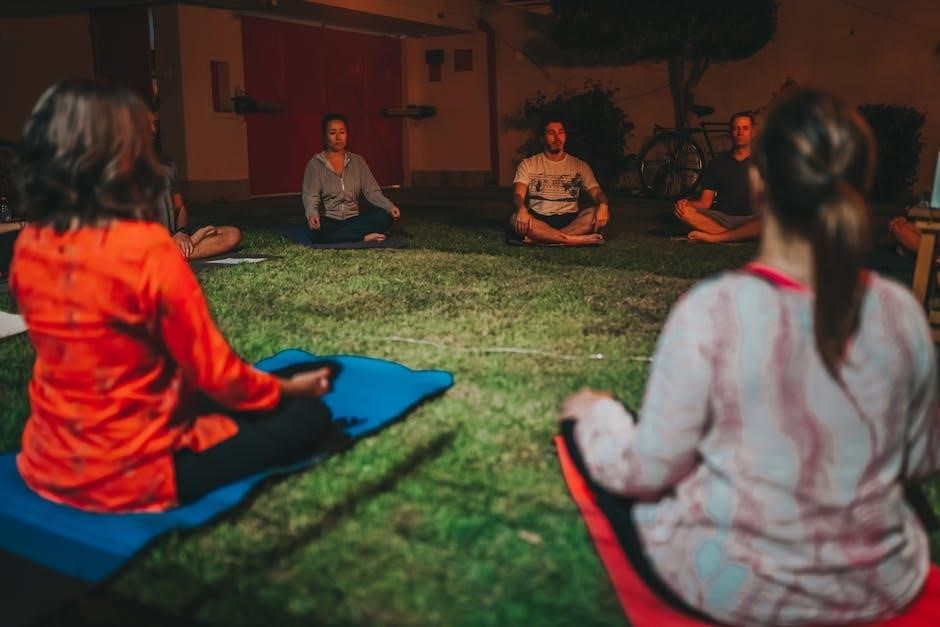
Creating a peaceful environment is key; find a quiet space, adopt a comfortable posture, and minimize distractions for optimal focus during your practice.
Finding a Quiet Space
Locating a tranquil environment is paramount for a successful 5-minute meditation. This doesn’t necessarily require a dedicated room; a corner of a quiet space will suffice. The goal is to minimize external disturbances that can pull your focus away from the practice. Consider areas away from high-traffic zones within your home, like living rooms or kitchens.
Inform household members of your intention to meditate, requesting minimal interruptions during this brief period. If complete silence isn’t achievable, explore using noise-canceling headphones or playing calming ambient sounds like nature recordings. Prioritize a space where you feel safe, comfortable, and undisturbed, allowing you to fully immerse yourself in the meditation experience. Remember, even a small, peaceful corner can become a sanctuary for mindful practice.
Comfortable Posture – Sitting or Lying Down
Choosing a comfortable posture is crucial for a relaxed 5-minute meditation. You can sit on a chair with your feet flat on the floor, or opt for a cross-legged position on a cushion. Ensure your spine is relatively straight, but not stiff – a gentle curve is natural. Alternatively, you may lie down on your back, arms relaxed by your sides, palms facing upwards.
Avoid positions that cause strain or discomfort, as this will distract you from the meditation. The key is to find a posture that allows you to remain alert yet relaxed. Support your back with cushions if needed. Experiment to discover what feels most sustainable for you during this short practice, prioritizing ease and minimizing physical tension.

Minimizing Distractions
Creating a distraction-free environment is vital for a successful 5-minute meditation. Inform those around you that you need uninterrupted time. Turn off notifications on your phone and other devices, or place them in another room. Softly close windows to reduce external noise, or consider using earplugs if necessary.
While complete silence isn’t always achievable, aim to minimize disruptions. A dimly lit room can be conducive to relaxation. If external sounds arise during your meditation, acknowledge them without judgment, and gently redirect your focus back to your breath or the guided script. Remember, the goal isn’t to eliminate distractions entirely, but to learn to observe them without getting carried away.
The 5-Minute Guided Meditation Script
This script guides you through settling, deepening breath, mindful thoughts, positive emotions, and a gentle return, fostering relaxation and inner peace in just five minutes.
Phase 1: Initial Settling (Minute 1)
Begin by gently closing your eyes, or softening your gaze downwards. Take a moment to simply notice your body – the sensations of contact with the chair or the floor.
Body Scan – Noticing Sensations: Bring your awareness to your toes, noticing any sensations without judgment. Slowly move your attention up through your feet, ankles, calves, and knees. Observe any feelings of warmth, coolness, tingling, or pressure.
Gentle Breathing Awareness: Now, shift your focus to your breath; Notice the natural rhythm of your inhales and exhales. You don’t need to change your breathing, just observe it. Feel the rise and fall of your abdomen or chest with each breath. Allow yourself to settle into this moment, releasing any tension you may be holding.
Body Scan – Noticing Sensations
Begin to bring your attention inward, starting with the sensations in your toes. Notice any tingling, warmth, coolness, or pressure – simply observe without labeling it as good or bad.
Slowly move your awareness upwards, through the soles of your feet, your heels, and ankles. Acknowledge any sensations present, allowing them to be as they are. Continue this gentle scan, moving up your legs – calves, knees, and thighs.
Notice the points of contact between your body and the surface you’re sitting or lying on. Feel the support beneath you. Continue scanning, bringing awareness to your hips, abdomen, chest, and back. Observe, without judgment, whatever sensations arise.
Gentle Breathing Awareness
Now, gently shift your focus to your breath. Notice the natural rhythm of your inhales and exhales, without attempting to change it. Feel the rise and fall of your abdomen or chest with each breath.
Observe the sensation of the air entering your nostrils and filling your lungs. Notice the subtle pause between the inhale and exhale, and again between the exhale and inhale. Allow your breath to be your anchor, a point of stability in the present moment.
If your mind wanders – and it will – gently redirect your attention back to the sensation of your breath. There’s no need to criticize yourself; simply acknowledge the distraction and return to your anchor.
Phase 2: Deepening the Breath (Minute 2)
Let’s now deepen our breath, utilizing diaphragmatic breathing. Place one hand on your chest and the other on your abdomen. As you inhale, allow your abdomen to rise while keeping your chest relatively still. Exhale slowly, feeling your abdomen gently fall.
Continue this deep, belly breathing, noticing how it feels to fully fill your lungs with each inhale. This technique encourages relaxation and reduces stress. To further anchor your focus, we’ll begin counting breaths.
Inhale, and as you exhale, silently count “one.” Inhale, exhale, “two.” Continue counting up to ten, then start again at one. If you lose count, simply begin again at one without judgment.
Diaphragmatic Breathing Technique
Let’s focus on diaphragmatic breathing, also known as belly breathing. This technique encourages full oxygen exchange and activates the parasympathetic nervous system, promoting relaxation. Place one hand on your chest and the other on your abdomen, just below your ribs.
As you inhale deeply through your nose, consciously allow your abdomen to rise while keeping your chest relatively still. Feel your diaphragm descend, creating space for your lungs to expand fully. Exhale slowly through your mouth, gently contracting your abdominal muscles.
Notice the gentle rise and fall of your abdomen with each breath. This mindful breathing helps to calm the mind and body, reducing feelings of stress and anxiety.
Counting Breaths for Focus
To further anchor your attention, let’s introduce a simple counting technique. As you inhale, silently count “one.” As you exhale, count “two.” Continue this pattern, counting each inhale and exhale up to ten. If your mind wanders – and it likely will – gently acknowledge the thought without judgment and return your focus to the counting.
Don’t strive for perfection; the goal isn’t to count flawlessly, but to use the numbers as a gentle anchor for your awareness. If you lose count, simply begin again at one. This practice cultivates concentration and helps to quiet the mental chatter.
Allow the counting to become a soothing rhythm, guiding you deeper into a state of calm and present moment awareness.
Phase 3: Mindfulness of Thoughts (Minute 3)
Now, gently expand your awareness to include the thoughts that arise. Notice them as if they were clouds drifting across the sky – simply observing, without getting carried away by their content. You are not your thoughts; you are the awareness of your thoughts.
Avoid judging or analyzing these thoughts. Whether they are pleasant, unpleasant, or neutral, simply acknowledge their presence. Labeling them – “thinking,” “planning,” “remembering” – can create some distance.
When you find yourself caught up in a thought stream, gently acknowledge that you’ve been distracted and redirect your attention back to your breath. This is the practice of mindfulness – returning, again and again, to the present moment.
Observing Thoughts Without Judgment
As thoughts arise, notice them as fleeting mental events, like bubbles appearing and popping. Resist the urge to engage with their stories or analyze their meaning. Simply observe their presence, acknowledging, “thinking,” without labeling them as good or bad.
This isn’t about stopping thoughts – that’s often impossible! It’s about changing your relationship to them. Imagine you’re watching a movie screen; thoughts are the images that appear, but you are the awareness of the screen itself.
Practice non-attachment. Let thoughts come and go without clinging to them or pushing them away. This detached observation creates space and reduces their power over you, fostering inner peace.
Acknowledging and Releasing Thoughts
Once you’ve observed a thought, gently acknowledge its presence with a simple mental note – “worrying,” “planning,” or “remembering.” This act of naming creates distance and prevents getting swept away by the thought’s content.
Visualize releasing the thought. Imagine it drifting away like a cloud in the sky, floating down a stream, or dissolving into light; This symbolic gesture reinforces the idea that you don’t need to hold onto every thought that arises.
Return your focus to your breath. Each exhale can be an opportunity to release tension and let go of lingering thoughts, anchoring you in the present moment and cultivating a sense of calm.
Phase 4: Cultivating Positive Emotions (Minute 4)
Shift your attention towards gratitude. Bring to mind three things you are genuinely thankful for – they can be simple, like a warm cup of tea, a supportive friend, or a beautiful sunrise. Feel the warmth of appreciation filling your heart.
Visualize a peaceful scene. Imagine a place where you feel safe, calm, and at ease. It could be a beach, a forest, or a cozy room. Engage your senses – what do you see, hear, smell, and feel in this place?
Allow these positive emotions to expand. Let gratitude and peacefulness wash over you, nurturing a sense of well-being and contentment within.
Focusing on Gratitude
Now, gently direct your awareness to the feeling of gratitude. Think of three specific things, big or small, for which you feel thankful. Perhaps it’s the comfort of your home, the kindness of a loved one, or a simple pleasure like a delicious meal.
As you recall each item, truly feel the appreciation. Let the warmth of gratitude fill your chest and radiate throughout your body. Notice any sensations that arise with this feeling – a softening in your shoulders, a gentle smile, or a sense of lightness.
Allow yourself to fully experience this positive emotion. Gratitude is a powerful antidote to stress and negativity, fostering a sense of contentment and joy.
Visualizing a Peaceful Scene
Now, gently bring to mind a place where you feel completely safe and at peace. This could be a real location you’ve visited, or a completely imagined one. Perhaps it’s a quiet beach, a lush forest, or a cozy cabin in the mountains.
Engage all your senses as you visualize this scene. What do you see? What do you hear? What do you smell? Feel the warmth of the sun on your skin, or the gentle breeze in your hair. Notice the colors, the textures, and the overall atmosphere.
Allow yourself to be fully immersed in this peaceful environment. Let go of any tension or worries, and simply bask in the serenity of the moment.
Bringing it to a Close
Gently re-establish awareness, wiggling fingers and toes, and noticing your surroundings. Carry this peaceful feeling forward into your day, refreshed and centered.
Phase 5: Gentle Return (Minute 5)
Slowly begin to deepen your breath, allowing a gentle energy to flow back into your body. Notice the sensations of your body against the surface supporting you. Gently wiggle your fingers and toes, bringing awareness back to your extremities.
Perhaps rotate your ankles and wrists, noticing any sensations that arise. Take a moment to stretch your body if it feels natural, but do so with gentleness and respect for your limits. Re-establish awareness of the sounds around you, acknowledging them without judgment.
Notice the light in the room, the temperature, and any scents present. Carry this sense of calm and presence with you as you slowly open your eyes, when you are ready. Allow yourself a moment to transition back to your day, feeling grounded and refreshed.
Wiggling Fingers and Toes
Gently invite a subtle movement back into your body, starting with your fingers and toes. Begin to wiggle them slowly, noticing the sensations of movement and reconnection. Feel the energy returning to your extremities, awakening them from their stillness.
There’s no need to rush; allow this process to unfold naturally. Expand the movement to your hands and feet, gently curling and uncurling them. Observe any tingling or warmth that arises. This is simply your body re-establishing contact with the physical world.
These small movements are a bridge between the inner stillness of meditation and the activity of daily life. Continue to breathe deeply as you explore these gentle motions, anchoring yourself in the present moment.
Re-establishing Awareness of Surroundings
Slowly begin to broaden your awareness, gently noticing the sounds around you. Don’t analyze them, simply acknowledge their presence – a distant car, birdsong, or the hum of appliances. Allow these sounds to enter your awareness without disrupting your calm.
Notice the feeling of your body supported by the chair or the floor. Feel the temperature of the air on your skin. Gradually bring your attention back to the room, observing the light and shadows.
Take a final deep breath, carrying the peace and clarity of your meditation with you. When you’re ready, gently open your eyes, maintaining a sense of groundedness and presence as you re-enter your day.

Adapting the Script
Modify the script for stress or anxiety, add music or nature sounds, and adjust the pace to suit individual needs and preferences for optimal results.
Modifying for Specific Needs (Stress, Anxiety)
For stress relief, emphasize the diaphragmatic breathing technique, extending the exhale to activate the parasympathetic nervous system. Incorporate imagery of releasing tension with each breath, visualizing worries dissolving like clouds.
When addressing anxiety, acknowledge anxious thoughts without judgment, gently guiding focus back to the breath. Use grounding techniques, like noticing sensations in the body, to anchor oneself in the present moment.

Adjust the language to be particularly soothing and reassuring. Replace potentially triggering words with calmer alternatives. Shorten phases if needed, prioritizing simplicity and ease. Encourage self-compassion throughout the practice, reminding individuals it’s okay to feel and to simply be.
Using Music or Nature Sounds
Ambient music, specifically instrumental pieces with slow tempos and minimal lyrics, can deepen the meditative state. Consider frequencies known for relaxation, like binaural beats or solfeggio tones. Ensure the volume is low and unobtrusive, serving as a subtle backdrop rather than a focal point.
Nature sounds – gentle rain, ocean waves, or birdsong – can create a calming atmosphere, connecting individuals to the natural world. These sounds can be particularly effective for grounding and reducing anxiety.
Experiment with different options to find what resonates best. Some prefer silence, while others benefit from auditory support. Seamlessly integrate the soundscape, fading it in at the beginning and out at the end of the meditation.
Adjusting the Pace of the Script
The script’s pace is crucial for a successful meditation. A slower pace allows for deeper absorption and mindful awareness, beneficial for those new to the practice or experiencing high stress. Conversely, a slightly faster pace can maintain engagement for experienced meditators.
Pauses are essential; incorporate deliberate silences after key instructions, allowing participants time to process and embody the guidance. Observe listener responses and adjust accordingly – if they seem rushed, slow down.
Consider your voice – a calm, gentle tone is paramount. Varying intonation can prevent monotony, but avoid dramatic shifts. Adapt the script’s rhythm to create a soothing and supportive experience for all levels.

Resources for Further Exploration
Meditation apps and websites offer diverse guided practices. Explore books on mindfulness to deepen your understanding and integrate meditation into daily life.
Recommended Meditation Apps

Headspace and Calm are popular choices, offering a wide range of guided meditations, including options specifically designed for beginners and short, 5-minute sessions. These apps often feature themed meditations targeting stress, anxiety, and sleep, making them versatile tools for daily practice.
Insight Timer provides a vast library of free guided meditations from various teachers, allowing you to explore different styles and find what resonates with you. You can filter by length, topic, and teacher to customize your experience.
Ten Percent Happier, created by Dan Harris, focuses on practical mindfulness for skeptics, offering a more secular approach to meditation. It includes courses and daily meditations to help build a consistent practice. These apps provide accessibility and convenience, making it easier to incorporate mindfulness into a busy lifestyle.
Online Guided Meditation Websites
UCLA Mindful Awareness Research Center offers free guided meditations, including options suitable for beginners and shorter practices. Their website provides a wealth of resources on mindfulness and meditation techniques, promoting a deeper understanding of the practice.
Tara Brach’s website features a collection of talks and guided meditations focused on mindfulness, compassion, and emotional healing. Her teachings are rooted in Buddhist psychology, offering a unique perspective on inner peace.
Insight Timer’s website complements its app, providing access to a vast library of free guided meditations and live events. Mindful.org offers articles, practices, and guided meditations, supporting a holistic approach to wellbeing. These platforms provide accessible resources for exploring mindfulness from the comfort of your home.
Books on Mindfulness and Meditation
“Mindfulness for Beginners” by Jon Kabat-Zinn provides a comprehensive introduction to mindfulness practice, including guided meditations and practical exercises. It’s an excellent resource for those new to the field, offering a clear and accessible approach.
“Wherever You Go, There You Are” by Jon Kabat-Zinn explores the essence of mindfulness, encouraging readers to cultivate present moment awareness in everyday life. It’s a classic text that inspires a deeper connection with oneself.
“10% Happier” by Dan Harris offers a skeptical yet insightful perspective on meditation, making it approachable for those who may be hesitant. “Real Happiness” by Sharon Salzberg guides readers through loving-kindness meditation, fostering compassion and inner peace.