
Mustang Manual Gearbox: A Comprehensive Overview (as of 02/17/2026)

From the Borg-Warner T10 in early models to the modern S650, Mustang’s manual transmissions have evolved, becoming a cornerstone of its performance identity and driver engagement.
Historical Context of Mustang Manual Transmissions
The initial Mustangs, launched in the early 1960s, primarily featured four-speed manual transmissions, with the Borg-Warner T10 being a prominent example. This gearbox quickly gained recognition for its robust construction and reliable performance, becoming a staple in early Mustang GTs and high-performance variants like the Shelby Cobra.
However, as automotive technology advanced, so did the demand for more sophisticated transmission options. The late 1970s and early 1980s saw a shift towards more fuel-efficient and versatile gearboxes. This paved the way for a significant milestone in Mustang transmission history: the introduction of the five-speed manual transmission in the Fox-body Mustang in 1983.
This five-speed, largely attributed to Tremec, quickly established itself as the standard for late-model street Mustangs, offering a wider gear ratio spread and a more comfortable highway cruising experience thanks to its generous fifth-gear overdrive. The evolution continued, with subsequent generations building upon this foundation, integrating new technologies and designs to enhance performance and driver satisfaction.
Early Mustang Transmissions: The Borg-Warner T10
The Borg-Warner T10, a celebrated transmission, held a significant place in the early years of the Ford Mustang, becoming a favored choice for performance-oriented models. Introduced in the late 1950s and continuing through the mid-1960s, it quickly gained a reputation for its durability and robust design, making it a popular option among manufacturers beyond Ford.
Known as a “side-loader” transmission due to its unique case design, the T10 offered smooth and precise shifting, contributing to the Mustang’s sporty driving experience. It was commonly found in early GT350s and Shelby Cobras, highlighting its capability to handle increased power and demanding driving conditions.
While Ford eventually transitioned to manufacturing its own in-house transmissions after the mid-1960s, the Borg-Warner T10 remains a highly sought-after component among Mustang enthusiasts and restorers, representing a crucial piece of the car’s early history and performance legacy.
The 1983 model year marked a pivotal moment in Mustang transmission history with the introduction of a five-speed manual gearbox in the Fox-body generation. Prior to this, Mustangs typically featured four-speed manual transmissions, but the addition of a fifth gear significantly enhanced the driving experience, particularly for highway cruising.
This five-speed transmission, largely credited to Tremec, quickly became the standard-bearer for late-model Mustang street cars, offering a more refined and efficient driving experience. The generous fifth-gear overdrive allowed for lower engine speeds at higher velocities, resulting in improved fuel economy and reduced noise levels during long journeys.
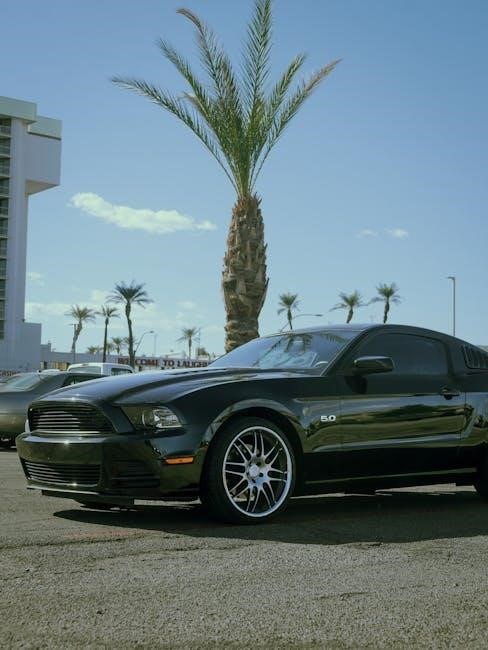
The shift to a five-speed configuration represented a substantial upgrade, solidifying the Fox-body Mustang’s reputation as a capable and versatile performance vehicle. It laid the groundwork for future transmission advancements and remains a beloved feature among Mustang enthusiasts today.
Tremec Transmissions in Mustangs: A Standard-Bearer
Tremec has become synonymous with high-quality manual transmissions in the Mustang world, establishing itself as a true standard-bearer since its initial appearance in the Fox-body Mustangs of 1983. The company’s commitment to durability, precision, and performance has made its gearboxes a favorite among both factory installations and aftermarket upgrades.
Over the years, Tremec has consistently provided Mustang enthusiasts with reliable and robust transmission options, evolving its designs to meet the demands of increasingly powerful engines and performance-oriented driving styles. Their transmissions are known for their smooth shifting action and ability to handle significant horsepower and torque.
From the original five-speed units to more modern offerings like the T6060 and Magnum, Tremec continues to innovate and refine its products, ensuring that Mustang drivers have access to the best possible manual transmission technology. This legacy of quality and performance has cemented Tremec’s position as a leading supplier to the Mustang community.
Evolution of Manual Gearboxes in Later Mustang Generations
Following the Fox-body era, Mustang manual transmissions continued to evolve, adapting to advancements in engine technology and shifting driver expectations. The SN95 and New Edge Mustangs saw refinements to existing Tremec designs, focusing on improved durability and shift quality. However, the S197 generation marked a significant shift, with the introduction of the MT82 transmission.
While the MT82 offered a modern six-speed configuration, it faced criticism regarding its robustness, particularly in high-performance applications. This led to aftermarket solutions and upgrades aimed at addressing its weaknesses. The S550 Mustang brought further changes, with a focus on enhancing the overall driving experience and offering a more refined manual transmission feel.
Currently, the S650 Mustang features a Getrag-sourced manual transmission, receiving mixed feedback from enthusiasts, with some preferring earlier models or considering automatic alternatives. This ongoing evolution demonstrates Ford’s commitment to providing Mustang drivers with a range of manual transmission options, each tailored to different performance levels and driving preferences.

Performance Manual Transmissions for Racing
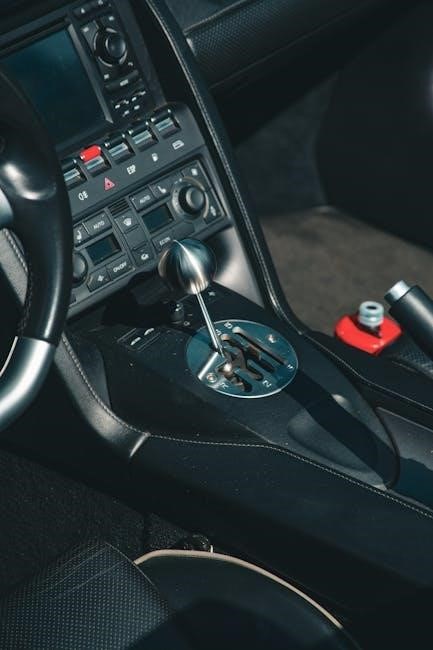
For serious racers, options like Hollinger, Samsonas, and G Force provide robust, high-performance gearboxes, while Tremec’s T6060 and TR3160 offer excellent value and durability.
High-End Sequential Gearboxes: Hollinger and Samsonas
When it comes to the pinnacle of Mustang racing transmissions, Hollinger and Samsonas sequential gearboxes represent the ultimate investment. These aren’t simply modified factory units; they are purpose-built for competition, prioritizing lightning-fast shifts and exceptional durability. Hollinger, a renowned name in motorsport, offers fully customizable sequential transmissions known for their robust construction and precise engagement. Samsonas, particularly noted for its lightweight designs, provides a significant weight reduction advantage, enhancing the car’s overall handling and responsiveness.
Chuck Bilodeau’s choice of a Samsonas gearbox exemplifies the commitment to top-tier performance. Sequential transmissions eliminate the need for traditional H-pattern shifting, allowing drivers to upshift and downshift with a single movement, minimizing disruption to power delivery. This results in dramatically quicker lap times and a competitive edge on the track. However, these high-end solutions come at a substantial cost, making them ideal for professional racers and serious enthusiasts seeking the absolute best.
Race-Built H-Pattern Gearboxes: G Force
G Force transmissions occupy a significant position in the Mustang racing landscape, offering robust and highly customizable H-pattern gearboxes. Unlike sequential transmissions, G Force retains the traditional shift pattern, appealing to drivers who prefer a more familiar feel while still demanding race-level performance. These aren’t your average street-legal transmissions; they are meticulously engineered for the stresses of track competition, featuring strengthened gears, upgraded synchronizers, and reinforced housings.
G Force provides a range of options, allowing racers to tailor the gearbox to their specific engine output and racing discipline. Dog engagement versions eliminate synchronizers altogether, resulting in incredibly fast, albeit notchy, shifts. This comes at the cost of increased drivetrain shock and requires skilled driving. They represent a middle ground between the cost of a modified stock transmission and the expense of a full sequential setup, making them a popular choice for dedicated racers seeking a balance of performance and value.
T6060 and Magnum Transmissions: Popular Racing Choices
The T6060 and Magnum transmissions have become exceptionally popular choices for Mustang racers, bridging the gap between affordability and high performance. These gearboxes, often sourced from Tremec, offer significant upgrades over stock units, capable of handling substantial power increases commonly found in modified Mustangs. They represent a substantial step up from the MT82, providing increased strength and durability for demanding track applications.
Racers frequently opt for these transmissions due to their relative ease of availability and established aftermarket support. Upgrades such as stronger input shafts, hardened gears, and improved shift forks are readily available, allowing for further customization. The Magnum, in particular, is known for its wider gear ratios, providing more flexibility in tuning the car for different track configurations. Both the T6060 and Magnum offer a robust and reliable solution for racers looking to improve their Mustang’s performance without breaking the bank.
TR3160 Transmissions: A Step Up in Performance
The TR3160 transmission represents a notable advancement in performance for Mustang enthusiasts seeking a robust and reliable manual gearbox. Positioned above the MT82 Calimer Stage 3 in terms of capability, the TR3160 offers increased strength and durability, making it suitable for higher horsepower applications and more aggressive driving styles. It’s a popular choice for those transitioning from street to track use, or simply desiring a more substantial feel in their daily driven Mustang.
Often favored for its ability to withstand increased torque loads, the TR3160 features stronger internal components compared to its predecessors. While not as exotic as sequential or full-blown dogbox setups like those from Hollinger or G Force, it provides a significant performance boost without the substantial cost. Racers appreciate its relative affordability and ease of maintenance, making it a practical upgrade for both amateur and seasoned competitors. It’s a solid foundation for building a high-performing Mustang.
MT82 Calimer Stage 3: Entry-Level Racing Option
The MT82 Calimer Stage 3 transmission serves as an accessible entry point for Mustang owners venturing into the world of racing or high-performance driving. Representing the lower end of the racing transmission spectrum, it’s a modified version of the factory MT82 gearbox, enhanced for improved durability and performance. This upgrade typically involves the installation of straight-cut gears, which contribute to quicker, more precise shifts, and reduced drivetrain friction.
It’s a popular choice for those starting their racing journey or participating in lower-tier competitions where extreme strength isn’t paramount. While not as robust as the TR3160, T6060, or the high-end sequential options, the Calimer Stage 3 offers a noticeable improvement over the stock MT82, providing a more engaging and responsive driving experience. It’s a cost-effective solution for enhancing shift quality and handling increased power levels, making it a smart initial investment for aspiring racers.
Modern Mustang Manual Transmissions
S550 and S650 Mustangs present distinct manual transmission experiences, with the S650 receiving current feedback, while the 10-speed automatic remains a prevalent option.
The S550 Mustang Manual Transmission: Considerations
The S550 Mustang, produced from 2015 to 2023, offered a six-speed manual transmission as a popular choice for enthusiasts. However, discussions surrounding its feel and engagement have been quite prevalent within the Mustang community. Many drivers have expressed mixed opinions, with some appreciating its relatively short throws and direct connection, while others have noted a somewhat vague or notchy shift quality.
Notably, online forums, such as Reddit’s r/Mustang, reveal a sentiment where potential S650 buyers are even considering older, used GT350 models or S550s equipped with the automatic transmission due to concerns about the S550 manual’s performance. This suggests that the S550’s manual gearbox isn’t universally loved and is a significant factor for buyers weighing their options. Prospective owners should carefully consider their preferences and potentially test drive both manual and automatic versions before making a decision.
The S650 Mustang Manual Transmission: Current Feedback
The introduction of the S650 Mustang in 2024 brought with it a revised six-speed manual transmission. Initial feedback, however, has been a source of considerable debate amongst Mustang enthusiasts. Reports suggest a heavier shift feel compared to previous generations, and some drivers have described it as requiring more effort to operate smoothly.
Concerns have surfaced regarding the transmission’s engagement and precision, leading some potential buyers to question whether the manual option truly enhances the driving experience. This has prompted discussions about potentially opting for the ten-speed SelectShift automatic instead, or even seeking out a used GT350. While the S650 manual aims to provide a more robust and connected feel, the current consensus indicates that it may not fully satisfy all enthusiasts’ expectations, necessitating careful consideration before purchase.
10-Speed SelectShift Automatic vs. Manual: A Comparison
The 2023 and 2024 Mustang models offer a compelling choice: the traditional six-speed manual or the advanced 10-speed SelectShift automatic. The automatic, standard on the GT and EcoBoost trims, prioritizes efficiency and rapid shifts, leveraging computer control for optimal performance. It consistently delivers quicker acceleration times and smoother transitions, particularly in everyday driving scenarios.
However, the manual transmission appeals to drivers seeking a more engaging and connected experience. While the S650’s manual has received mixed reviews regarding shift feel, it still provides a direct link between driver and machine. The choice ultimately depends on individual preferences; those prioritizing performance and convenience may favor the automatic, while enthusiasts valuing control and driver involvement might lean towards the manual, despite its current criticisms.
Maintenance and Upgrades
Regular fluid changes, shifter improvements, and complete rebuilds are crucial for maintaining Mustang manual gearboxes, ensuring longevity and optimal performance through preventative care.
Common Issues with Mustang Manual Gearboxes
Mustang manual transmissions, while generally robust, can exhibit specific issues depending on age and usage. Older T10 boxes are prone to wear in the synchronizers, leading to grinding during shifts, particularly into second gear. Fox-body five-speeds, including the T5, can develop internal wear, manifesting as sloppy shifter feel and potential gear pop-outs.
The MT82, found in S197 and early S550 Mustangs, is often criticized for its vague shift quality and susceptibility to third-gear issues. This often stems from internal component wear or insufficient lubrication. Later TR3160 and Magnum transmissions are generally more reliable, but can still experience bearing failures or damage to the shift forks under aggressive use.
Regardless of the transmission type, neglecting regular fluid changes accelerates wear. Worn clutch components, such as the throw-out bearing and pressure plate, can mimic transmission problems, so proper diagnosis is essential. Identifying and addressing these issues promptly prevents further damage and maintains the driving experience.
Manual Transmission Fluid: Types and Change Intervals
Selecting the correct manual transmission fluid (MTF) is crucial for longevity and smooth operation. Older Borg-Warner and Toploader transmissions typically require a GL-4 gear oil with an API service classification. Modern transmissions, like the T5, T6060, and TR3160, often specify a synthetic MTF meeting Ford’s M-2C305-AA specification, or equivalent.
Using the wrong fluid can lead to synchronizer wear and shifting problems. Avoid GL-5 fluids in older transmissions as they contain additives corrosive to the brass synchronizers. Change intervals vary based on driving conditions. For street use, a fluid change every 30,000-50,000 miles is recommended.
However, aggressive driving, track use, or frequent towing necessitates more frequent changes – potentially every 15,000-30,000 miles. Regularly inspect the fluid for metal shavings or a burnt odor, indicating internal wear. Proper fluid maintenance is a cost-effective way to extend the life of your Mustang’s manual gearbox.
Aftermarket Shifters: Improving Feel and Precision
Many Mustang owners seek to enhance the driving experience with aftermarket shifters. Stock shifters, while functional, can sometimes exhibit excessive play or a vague feel. Aftermarket options address these shortcomings, offering shorter throws, more precise engagement, and a firmer, more connected feel.
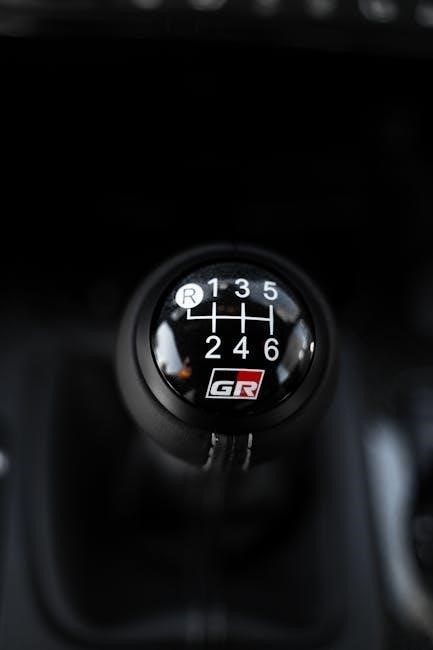
Popular choices include shifters from companies specializing in performance upgrades. These often feature adjustable features, allowing customization of throw length and shift knob position. Upgrading the shift bushings – replacing rubber components with polyurethane or brass – further reduces slop and improves responsiveness.
Installation is typically straightforward for mechanically inclined owners, though professional installation is recommended for those unfamiliar with transmission components. A quality aftermarket shifter can transform the driving experience, making gear changes quicker, more accurate, and ultimately, more enjoyable, especially for spirited driving or track use.
Rebuilding a Mustang Manual Transmission: Overview
Rebuilding a Mustang manual transmission is a complex undertaking, best suited for experienced mechanics with specialized tools. It involves complete disassembly, inspection of all components for wear or damage, and replacement of worn parts. Common areas requiring attention include synchronizers, bearings, gears, and seals.
The process begins with draining the fluid and separating the transmission from the engine. Careful labeling of parts during disassembly is crucial for correct reassembly. A thorough cleaning of all components is essential before inspection. Specialized tools, like gear pullers and bearing presses, are often necessary.
Reassembly requires meticulous attention to detail, proper lubrication, and accurate torque specifications. A transmission rebuild kit typically includes necessary seals, gaskets, and sometimes, synchronizers. While challenging, a successful rebuild can restore a transmission to like-new condition, offering significant cost savings over replacement.