
Thanksgiving Parents Guide: A Comprehensive Plan
Navigating Thanksgiving with children requires planning! From historical context to delightful activities, this guide ensures a memorable and stress-free holiday for everyone involved.
Thanksgiving, at its core, is a celebration of gratitude and togetherness. It’s a time to reflect on blessings, share a feast, and create lasting memories with loved ones. For parents, this holiday presents a unique opportunity to instill valuable lessons in children about appreciation, history, and family bonds.
However, the reality of Thanksgiving with kids can sometimes feel overwhelming. Balancing cooking, entertaining, and managing little ones requires careful planning and a healthy dose of patience. This guide aims to equip you with the tools and ideas to navigate the holiday season with grace and joy, transforming potential chaos into cherished moments. Remember, traditions and shared experiences are key!
Understanding Thanksgiving History for Kids
Introducing the historical context of Thanksgiving to children is crucial, but it needs to be age-appropriate. Begin by explaining that Thanksgiving originated from a harvest festival celebrated by early settlers and the Wampanoag people. Focus on the idea of sharing and gratitude for a successful harvest – a concept young minds can grasp.
Avoid overly complex narratives initially. Instead, emphasize the spirit of cooperation and thankfulness. As they grow older, you can introduce more nuanced perspectives, acknowledging the complexities of the historical relationship between settlers and Native Americans. It’s about fostering understanding and respect for all cultures involved in this significant event.
The First Thanksgiving Story – Simplified
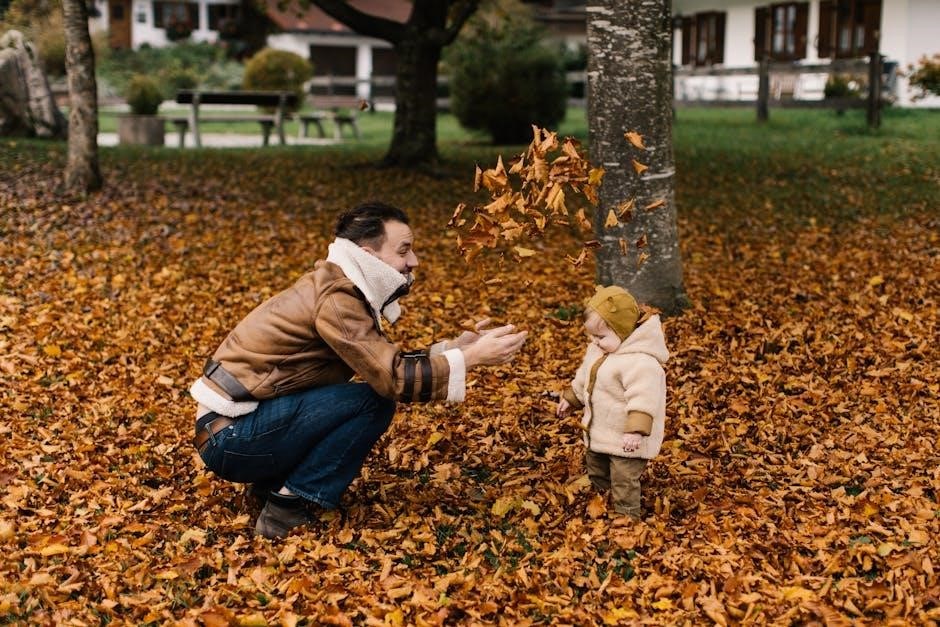
Tell the story of the first Thanksgiving as a tale of survival and friendship. Explain how the Pilgrims arrived in a new land and struggled to grow food. The Wampanoag people, led by Massasoit, taught them how to cultivate the land, fish, and survive the harsh winter.
The first harvest was a celebration of this newfound success, and the Pilgrims invited the Wampanoag to share a feast. It wasn’t exactly like our modern Thanksgiving – they ate deer, turkey, and other local foods. Emphasize the sharing and gratitude that formed the heart of this initial gathering, a moment of unity between two different groups.
The Wampanoag Perspective – Acknowledging History
It’s crucial to present a balanced historical view, acknowledging the Wampanoag’s side of the story. Explain that the arrival of the Pilgrims marked a significant change – and hardship – for the Wampanoag people. Their generosity helped the Pilgrims survive, but this also led to eventual conflict and displacement.
Discuss how Thanksgiving can be a complex holiday for Native Americans, a time for remembrance and reflection on their history. Encourage children to learn more about Wampanoag culture, traditions, and contemporary life. Resources from Wampanoag tribal websites offer authentic perspectives, fostering respect and understanding beyond the traditional narrative.
Planning a Kid-Friendly Thanksgiving Menu
A successful Thanksgiving menu considers everyone’s tastes, especially the little ones! While traditional dishes are important, incorporate familiar favorites to ensure happy diners. Think beyond turkey – offer simpler options like mac and cheese, chicken nuggets, or fruit salad. Presentation matters; arrange food playfully to increase appeal;
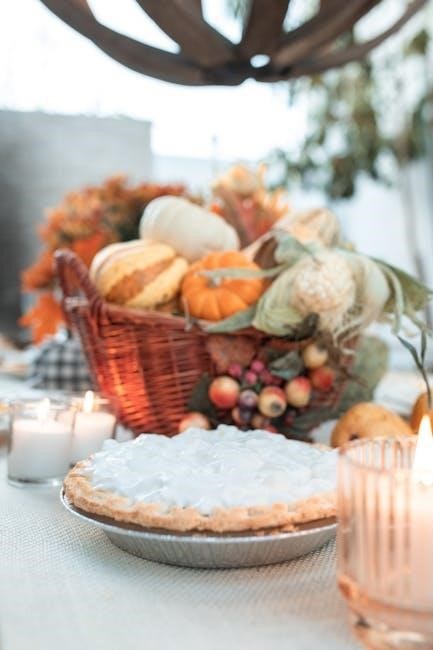
Involve children in the menu planning process, asking for their input on side dishes or desserts. This fosters excitement and a sense of ownership. Remember to consider portion sizes – smaller servings prevent overwhelm. Don’t be afraid to deconstruct dishes, allowing kids to customize their plates!
Classic Dishes with a Kid Appeal
Transforming traditional Thanksgiving fare into kid-friendly delights is achievable! Mashed potatoes become more exciting with a swirl of gravy and a sprinkle of cheese. Stuffing can be presented in fun shapes using cookie cutters. Green bean casserole, often a hurdle, might be more palatable with crispy fried onions removed initially.

Turkey, while the star, can be served with a side of cranberry sauce for dipping. Sweet potato casserole, topped with marshmallows, is usually a hit. Even Brussels sprouts can win kids over when roasted with bacon or maple syrup. Remember, small adjustments can make a big difference in acceptance!
Allergy-Friendly Thanksgiving Options
Thanksgiving can be inclusive for all with thoughtful planning! Common allergens like nuts, dairy, and gluten require careful consideration; Explore dairy-free mashed potatoes using plant-based milk and butter alternatives. Gluten-free stuffing recipes abound, utilizing gluten-free bread or rice. Nut-free desserts are crucial, clearly labeling ingredients.
Always inquire about guest allergies beforehand and communicate ingredient lists. Consider separate preparation areas to avoid cross-contamination. Pumpkin pie can be adapted with almond flour crusts. Focus on naturally allergy-friendly dishes like roasted vegetables and fresh fruit. Prioritizing safety ensures everyone enjoys the feast!
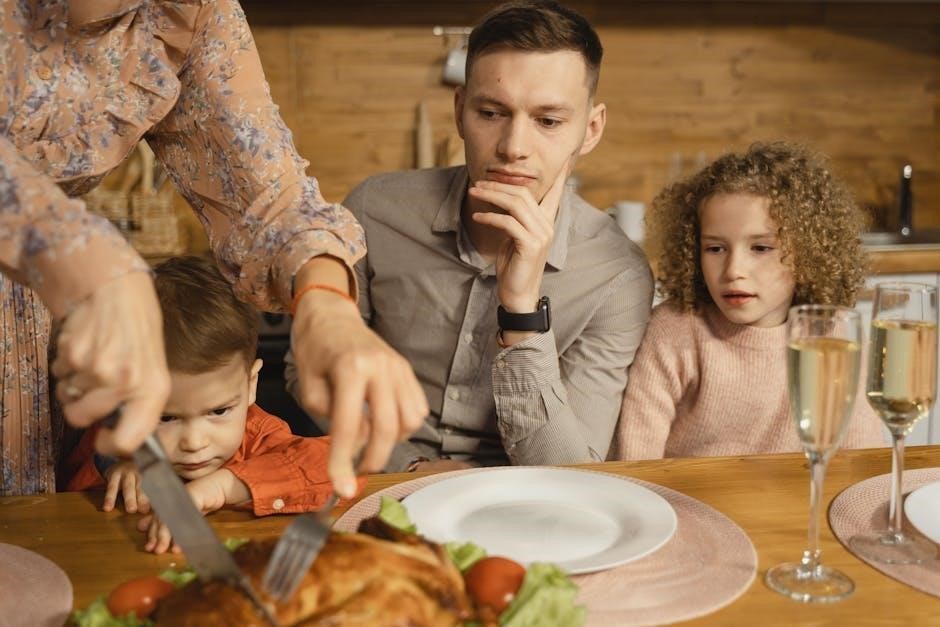
Thanksgiving Activities for Different Age Groups
Keep little ones engaged with age-appropriate fun! Toddlers (1-3) thrive with simple sensory play – exploring dried corn kernels or creating handprint turkeys. Preschoolers (4-10) enjoy crafting, like making thankful trees or decorating place mats. Elementary-aged children can assist with age-appropriate cooking tasks.
Teens can contribute to meal planning, set the table, or lead family games. A scavenger hunt with Thanksgiving-themed clues is universally appealing. Consider a family volunteer opportunity before or after the meal. Remember to balance structured activities with free playtime, fostering joyful memories for all.
Toddler Thanksgiving Fun (Ages 1-3)
Keep tiny hands busy and safe! Sensory bins filled with cooked pasta “turkeys” or colorful fall leaves provide tactile exploration. Simple crafts like finger-painting turkeys or sticking tissue paper onto pre-drawn shapes are perfect. Read Thanksgiving-themed board books focusing on gratitude and family.
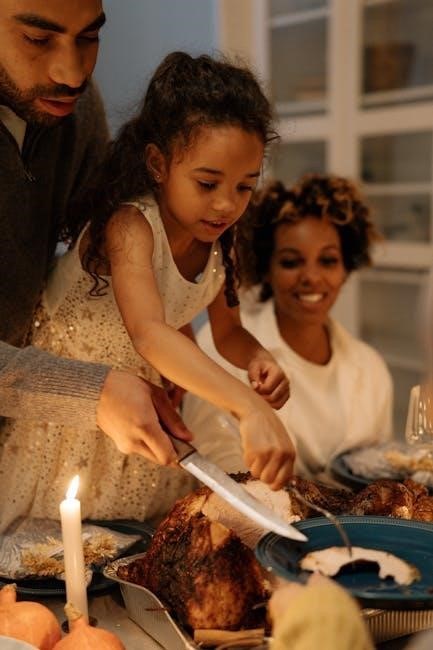
Supervise closely during all activities. Short attention spans mean frequent activity changes are key. Focus on simple concepts like “thank you” and “family.” A designated safe play area away from the kitchen bustle is essential. Embrace the mess – joyful exploration is the goal!
Preschool & Elementary Thanksgiving Crafts (Ages 4-10)
Spark creativity with engaging crafts! Construct turkey handprints using paint and colorful feathers. Create gratitude chains by writing things they’re thankful for on paper strips. Design placemats for the Thanksgiving table with fall-themed drawings and stickers. Build miniature pilgrim hats from construction paper.
Encourage storytelling while crafting – ask them what they’re thankful for and why. These activities foster fine motor skills and imaginative play. Provide age-appropriate assistance and celebrate their unique creations. Remember, the process is more important than perfection!
Teen-Focused Thanksgiving Engagement
Involve teens beyond setting the table! Assign them responsibility for a dish – perhaps a side or dessert – allowing culinary exploration. Encourage them to create a Thanksgiving playlist for background music, reflecting their tastes. Task them with capturing family memories through photos or videos.
Facilitate conversations about gratitude, prompting them to share what they appreciate. Include them in planning activities or games. Respect their need for downtime and social connection with friends. Acknowledge their contributions and value their perspectives – fostering a sense of belonging.
Creating Thanksgiving Traditions
Thanksgiving thrives on cherished traditions! While classic elements are wonderful, personalize the holiday to reflect your family’s unique identity. Consider a yearly themed table setting, a special pre-dinner walk, or a post-meal family game. Embrace spontaneity and be open to new ideas.
The key is consistency and shared enjoyment. Traditions create lasting memories and a sense of belonging. Don’t be afraid to start small – even “pie for breakfast” can become a beloved ritual. Involve everyone in brainstorming, ensuring traditions resonate with all ages and interests.
Starting New Traditions – Family Input
New traditions flourish with collaborative creation! Don’t dictate – facilitate a family meeting to brainstorm ideas. Encourage everyone, even the youngest members, to contribute. Perhaps a yearly volunteer activity, a themed gratitude share, or a creative craft session?
Write down all suggestions without judgment, then vote or discuss to narrow down the options. The goal is inclusivity and excitement. Remember, a successful new tradition is one everyone anticipates and enjoys. Be flexible; traditions evolve! Embrace the process and the joy of building something special together as a family.
Pie for Breakfast & Other Unique Ideas
Break from the norm with playful twists! Inspired by a grandmother’s suggestion, pie for breakfast adds a delightful, whimsical start to Thanksgiving Day. Consider a family game tournament, a themed movie marathon, or creating personalized place cards.
Other ideas include a “thankful scavenger hunt” or a reverse Thanksgiving – dessert first! These unique touches inject fun and create lasting memories. Don’t be afraid to experiment and personalize your celebration. The key is to embrace spontaneity and create a joyful atmosphere that reflects your family’s personality.
Managing Thanksgiving Day Expectations
Realistic expectations are crucial for a peaceful Thanksgiving! Acknowledge that perfection is unattainable; focus on connection, not a flawless feast. Prepare for potential family dynamics and have strategies for navigating sensitive conversations.
Delegate tasks to involve everyone and reduce parental stress. Accept that things might not go exactly as planned, and embrace the imperfections. Remember, the goal is to enjoy quality time together, fostering gratitude and creating cherished memories. Prioritize flexibility and a positive attitude, allowing for spontaneous moments and genuine connection.
Dealing with Family Dynamics
Thanksgiving gatherings can sometimes stir up complex family dynamics. Anticipate potential friction points and establish boundaries beforehand. Designate a neutral space for anyone needing a break from intense interactions. Encourage respectful communication and active listening, modeling positive behavior for children.

Avoid engaging in arguments or taking sides; redirect conversations towards neutral topics. Remember, you can’t control others’ behavior, only your reaction to it. Focus on fostering a positive atmosphere and prioritizing the well-being of your immediate family. A little pre-planning can significantly minimize stress and maximize enjoyment for everyone.
Minimizing Stress for Parents
Thanksgiving shouldn’t feel overwhelming for parents! Delegate tasks – even young children can help with simple chores. Accept offers of assistance from family and friends; don’t feel you must do everything yourself. Prioritize self-care; schedule short breaks throughout the day to recharge.
Lower your expectations for perfection. A slightly imperfect meal or a messy house won’t ruin the holiday. Focus on creating joyful memories, not achieving an unattainable ideal. Remember, the goal is connection and gratitude, not a flawlessly executed event. Embrace the chaos and enjoy the moment!
Gratitude Practices for the Whole Family
Thanksgiving is the perfect time to cultivate gratitude! Beyond simply saying “thank you,” actively practice appreciation as a family. Encourage everyone to reflect on the positive aspects of their lives, big or small. Make gratitude a conversation starter throughout the day, not just during the meal.
Incorporate intentional gratitude exercises. A family gratitude circle, where each person shares something they’re thankful for, fosters connection. Modeling gratitude as a parent is crucial; children learn by observing your behavior. This holiday, shift the focus from what you want to what you have.
Gratitude Jar or Tree
Create a visual reminder of thankfulness with a gratitude jar or tree! Throughout November (or even just the week of Thanksgiving), have family members write down things they are grateful for on slips of paper. Decorate a jar or create paper leaves for a tree, and add a new entry each day.
On Thanksgiving Day, take time to read the notes aloud. This activity sparks meaningful conversations and reinforces the spirit of gratitude. It’s a beautiful way to reflect on blessings and appreciate the good things in life, fostering a positive atmosphere. This simple tradition becomes a cherished keepsake!
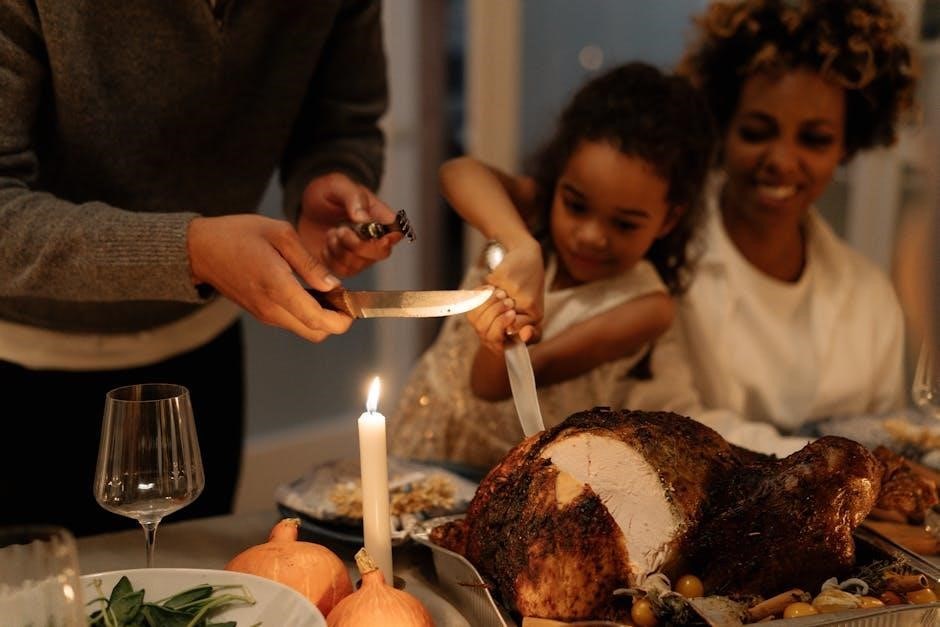
Sharing Thankful Moments at the Table
Transform your Thanksgiving meal into a heartfelt expression of gratitude! Before digging in, go around the table and have each person share something they are thankful for. Encourage everyone, even the youngest children, to participate – perhaps with a little prompting from a parent.
This tradition fosters connection and reminds everyone of the blessings in their lives. It’s a wonderful way to pause and appreciate the simple joys and the people you share them with. Make it a yearly ritual, building a legacy of thankfulness within your family, strengthening bonds and creating lasting memories.
Thanksgiving Safety Tips
Prioritize safety during the Thanksgiving bustle! The kitchen is a hub of activity, so supervise children closely. Keep hot foods and liquids out of reach, and establish a “kid-free zone” around the stove. Be mindful of potential choking hazards, especially with small children present.
Food safety is crucial; ensure proper cooking temperatures and refrigerate leftovers promptly. Additionally, be aware of potential allergens when guests bring dishes. A safe Thanksgiving is a happy Thanksgiving, allowing everyone to enjoy the festivities without worry. Vigilance prevents accidents and ensures a joyful celebration.
Kitchen Safety with Kids Around
A busy Thanksgiving kitchen demands extra caution with little ones! Designate specific tasks for children that are age-appropriate and away from heat sources. Never leave cooking unattended, and always turn pot handles inward. Sharp knives and appliances should be securely stored and out of reach.
Teach children about kitchen hazards – hot surfaces, slippery floors, and the dangers of running. Establish clear boundaries and enforce them consistently. A little preparation and supervision can prevent accidents and ensure a safe, enjoyable cooking experience for the whole family during this festive time.

Food Safety Guidelines
Thanksgiving feasts require diligent food safety practices! Ensure poultry is thoroughly cooked to an internal temperature of 165°F (74°C) using a food thermometer. Prevent cross-contamination by using separate cutting boards for raw and cooked foods. Refrigerate leftovers promptly – within two hours – in shallow containers to cool quickly.

Wash hands frequently and thoroughly, especially after handling raw meat. Be mindful of potential allergens and clearly label dishes containing common allergens. Proper food handling minimizes the risk of foodborne illness, allowing everyone to enjoy a safe and delicious Thanksgiving meal with peace of mind.