
Fire Alarm Manual: A Comprehensive Guide
This manual details fire alarm systems, encompassing design, installation, and maintenance, adhering to regulations for life safety and property protection․
Fire alarm systems are vital integrated complexes of fire and security alarms, primarily designed for detecting unauthorized access or the presence of smoke and fire․ These systems function by monitoring for anomalies and promptly alerting occupants, initiating evacuation procedures, and notifying emergency services․ A core objective is to minimize potential loss of life and property damage․
Modern systems range from simple, manually operated setups to sophisticated, fully automated networks․ They incorporate components like detectors, manual call points, control panels, and notification appliances․ Understanding the different types of fire alarm systems – conventional, addressable, wireless, and aspirating – is crucial for selecting the appropriate solution for a given environment․ Proper installation and regular maintenance, as outlined in standards like BS 5839-6:2004, are paramount to ensuring reliable operation and maximizing effectiveness․
The Importance of Fire Alarm Systems
Fire alarm systems are not merely regulatory requirements; they are fundamental to life safety and property preservation․ Building regulations mandate their presence, emphasizing their critical role in mitigating fire risks․ Early detection provided by these systems allows for swift evacuation, minimizing potential injuries and fatalities․ Furthermore, prompt notification of emergency services can significantly reduce property damage through rapid fire suppression․
The effectiveness of a fire alarm system hinges on its reliability and proper functioning․ Regular maintenance, including inspections and testing, is essential to ensure all components operate as intended․ Systems integrated with other fire protection measures, such as sprinkler systems and gas suppression systems, offer a comprehensive defense against fire hazards․ Investing in a well-designed and maintained fire alarm system is a proactive step towards safeguarding lives and assets, demonstrating a commitment to safety and responsible building management․
Types of Fire Alarm Systems
Various systems exist, including conventional, addressable, addressable-analog, wireless, and aspirating types, each offering unique features for diverse building needs and fire protection goals․
Conventional Fire Alarm Systems
Conventional fire alarm systems represent a foundational approach to fire detection, dividing a building into distinct zones․ Each zone comprises multiple detectors wired to a common circuit․ When a detector activates, the control panel identifies the zone experiencing the event, but not the specific device triggered․
This simplicity translates to lower installation costs, making them suitable for smaller buildings or specific areas within larger complexes․ However, pinpointing the exact fire location can be challenging, potentially delaying response times․ Troubleshooting can also be more time-consuming as technicians must manually check each device within the activated zone․
These systems typically utilize a single pair of wires connecting all devices in a zone back to the fire alarm control panel․ They are a reliable, albeit less sophisticated, option for basic fire protection needs, often found in older buildings or applications where precise location identification isn’t critical․ Regular inspection and testing are vital to ensure continued functionality․
Addressable Fire Alarm Systems
Addressable fire alarm systems offer a significant advancement over conventional systems by assigning a unique address to each device – detector, manual call point, or notification appliance․ This allows the fire alarm control panel to precisely identify the location of a fire event, improving response times and streamlining evacuation procedures․
Unlike conventional systems where a zone indicates a general area, addressable systems pinpoint the exact device activated․ This detailed information is crucial for larger, more complex buildings․ They utilize a more sophisticated wiring configuration, often a loop, allowing for bidirectional communication between the panel and each device․
Addressable systems also offer enhanced diagnostic capabilities, providing information on device status, potential faults, and maintenance needs․ While generally more expensive to install than conventional systems, the benefits of precise location identification and advanced features often justify the investment, particularly in environments demanding high levels of fire safety․
Addressable-Analog Fire Alarm Systems
Addressable-analog fire alarm systems represent a further refinement of addressable technology․ Instead of simply indicating a fire or no-fire state, these systems transmit an analog signal representing the level of a potential fire condition – such as smoke density or heat intensity – from each device to the control panel․
This analog data allows for sophisticated analysis and early warning detection․ The panel can be programmed with sensitivity settings, enabling it to differentiate between genuine fire events and nuisance alarms caused by things like dust or steam․ This reduces false alarms and improves system reliability․
Like standard addressable systems, each device has a unique address for precise location identification․ However, the analog signaling provides a richer dataset, enabling advanced features like drift compensation and trend monitoring․ These systems are often preferred in critical environments where early detection and minimal disruption are paramount, despite a higher initial cost․
Wireless Fire Alarm Systems
Wireless fire alarm systems offer a flexible and cost-effective alternative to traditional wired systems, particularly in buildings where installing cabling is difficult or impractical․ These systems utilize radio frequency (RF) communication to transmit signals between detectors, initiating devices, and the fire alarm control panel․

Components typically include wireless smoke detectors, heat detectors, pull stations, and sounders․ They are powered by long-life batteries, reducing the need for extensive wiring and minimizing disruption during installation․ However, regular battery checks and replacements are crucial for maintaining system reliability․
Modern wireless systems employ secure, encrypted communication protocols to prevent interference and unauthorized access․ They often feature mesh networking capabilities, where devices relay signals to extend the range and ensure robust coverage․ While generally suitable for many applications, careful site surveys are essential to verify adequate signal strength throughout the protected premises․
Aspirating Fire Alarm Systems
Aspirating smoke detection represents a highly sensitive and proactive approach to fire protection․ Unlike conventional detectors that react to smoke after it reaches a specific point, aspirating systems continuously draw air samples from protected areas through a network of tubing․
These samples are then analyzed within a central detection unit for the presence of smoke particles․ This method allows for very early fire detection, even before visible smoke is present, making them ideal for critical environments like data centers, telecommunication facilities, and museums․
Aspirating systems offer configurable sensitivity levels and can detect a wide range of fire types․ They typically include features like remote monitoring, alarm history logging, and self-diagnostics․ Installation requires careful planning of the tubing network to ensure comprehensive coverage, and regular filter maintenance is essential for optimal performance․

Components of a Fire Alarm System
Essential components include detectors, manual call points, a control panel, and notification appliances – sirens and strobes – working together for swift fire detection and alerts․
Fire Detectors (Smoke, Heat, Flame)
Fire detectors are crucial for early fire identification, forming the first line of defense in any fire alarm system․ These devices come in several types, each designed to respond to different aspects of a fire․ Smoke detectors are the most common, utilizing ionization or photoelectric sensors to detect airborne particles produced by combustion․ Ionization detectors are generally more responsive to fast-flaming fires, while photoelectric detectors excel at detecting smoldering fires․
Heat detectors, conversely, respond to a rise in temperature․ They are suitable for environments where smoke detectors might be prone to false alarms, such as kitchens or dusty areas․ There are fixed-temperature and rate-of-rise heat detectors, each with its own activation threshold․ Flame detectors, less frequently used, respond to the infrared or ultraviolet radiation emitted by flames, making them ideal for areas with rapidly developing fires․
The selection of the appropriate detector type depends heavily on the specific environment and potential fire hazards․ Proper placement and regular maintenance are vital for ensuring reliable operation and minimizing false alarms․
Manual Call Points (Pull Stations)
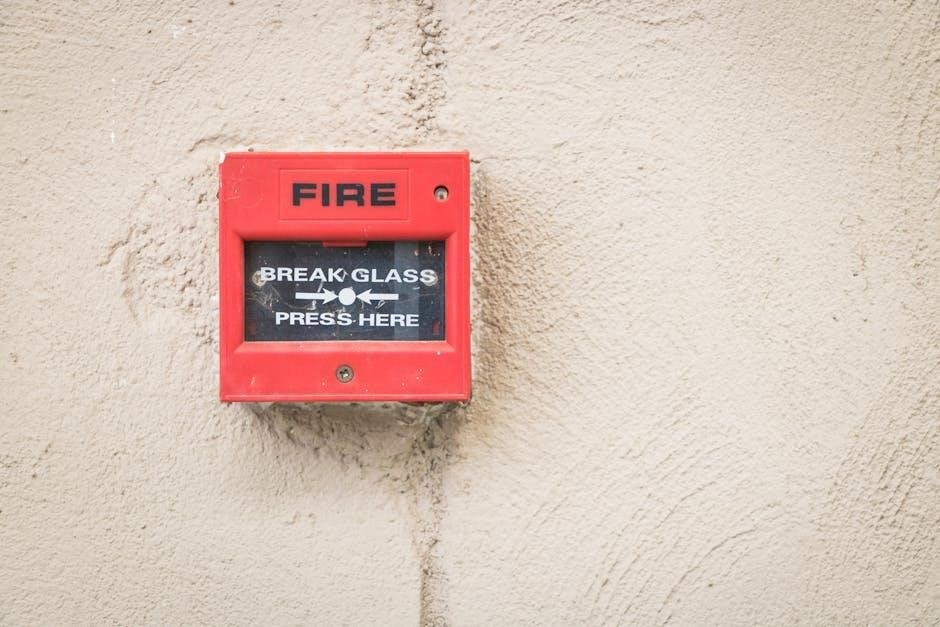
Manual call points, commonly known as pull stations, are essential components of a fire alarm system, providing a readily accessible means for individuals to initiate an alarm in case of a fire․ These devices require a deliberate manual action – typically pulling a lever or breaking glass – to activate the system․ They serve as a vital backup to automatic detection systems, particularly in situations where a fire might not be immediately detected by sensors․
Strategically placed pull stations should be located along normal paths of egress, ensuring they are easily visible and accessible to occupants․ Regulations often dictate specific requirements for their placement, considering factors like travel distance and obstruction․ Different types of pull stations exist, including single-action and double-action models, with double-action requiring two steps to prevent accidental activation․
Regular inspection and testing of manual call points are crucial to verify their functionality․ This includes ensuring the activation mechanism operates smoothly and that the alarm signal is reliably transmitted to the fire alarm control panel․
Control and Indicating Equipment (Fire Alarm Control Panel)
The Fire Alarm Control Panel (FACP) serves as the central hub of a fire alarm system, responsible for monitoring all connected devices – detectors, pull stations, and notification appliances․ It receives signals from initiating devices, processes the information, and activates the appropriate alarm notifications․ Modern FACPs often incorporate sophisticated features like zone identification, event logging, and remote monitoring capabilities․
FACPs are categorized by their complexity and functionality, ranging from conventional panels that handle simple systems to addressable panels offering detailed information about the location and nature of an alarm․ The panel provides a user interface, displaying system status, alarm locations, and trouble conditions․
Proper programming and configuration of the FACP are critical for reliable operation․ Regular testing and maintenance, including battery checks and software updates, are essential to ensure the panel functions correctly during an emergency․ Qualified technicians should perform these tasks․
Notification Appliances (Sirens, Strobes, Speakers)
Notification appliances are crucial for alerting building occupants to a fire emergency․ These devices transform alarm signals from the Fire Alarm Control Panel (FACP) into audible and visual warnings․ Common types include sirens, which produce a loud, distinctive sound; strobes, which emit bright, flashing lights; and speakers, capable of delivering voice evacuation messages․
The selection of notification appliances depends on building occupancy and code requirements․ For example, visual notification is essential in areas frequented by individuals with hearing impairments․ Speaker systems allow for phased evacuation, providing clear instructions and minimizing panic․
Proper placement and synchronization of these devices are vital for effective evacuation․ Appliances must be installed according to NFPA 72 standards, ensuring adequate sound and light coverage throughout the building․ Regular testing verifies functionality and audibility, confirming they operate as intended during an emergency․
Fire Alarm System Categories & Grades (BS 5839-6:2004)
BS 5839-6:2004 defines system categories (M, L1, L2, L3) based on life protection levels and risk assessment, guiding appropriate system design and implementation․

Category M: Manual Systems
Category M systems represent the most basic level of fire alarm protection, relying entirely on manual initiation via manual call points – commonly known as pull stations․ These systems lack automatic fire detection capabilities, meaning they won’t alert occupants to a fire until someone physically activates a call point․
This category is generally suitable for very small, simple premises with low fire risk and a consistently high level of staff vigilance․ Examples include small shops, warehouses with limited occupancy, or infrequently used outbuildings․
Crucially, Category M systems offer minimal protection and are not recommended for complex buildings or those with vulnerable occupants․ Regular inspection and testing of manual call points are vital to ensure their reliable operation․ The absence of automatic detection means a rapid response depends entirely on someone discovering the fire and activating the alarm․
Due to their limitations, Category M systems are increasingly rare in modern installations, often being superseded by systems offering at least a basic level of automatic detection․
Category L1: Maximum Life Protection
Category L1 systems provide the highest level of fire protection, designed to ensure life safety is prioritized above all else․ These systems incorporate automatic fire detection throughout the entire building, including all areas, and are linked to a centrally monitored alarm receiving centre (ARC)․ This ensures a swift response from the fire service, even if the building is unoccupied․
L1 systems are mandatory in complex buildings, high-risk premises (like hospitals and care homes), and where occupants may have limited mobility or awareness․ They typically feature sophisticated detection technologies, such as smoke detectors, heat detectors, and manual call points, strategically placed for optimal coverage․
Furthermore, L1 systems often include voice alarm systems for clear and effective evacuation instructions․ Regular and thorough maintenance, including comprehensive testing of all components, is crucial to maintain the system’s reliability․ This category represents the gold standard in fire alarm protection, offering the most robust defense against fire-related risks․
Category L2: Additional Life Protection
Category L2 fire alarm systems offer a high degree of life protection, though slightly less comprehensive than L1․ These systems feature automatic fire detection in common areas – escape routes like corridors and stairwells – and in areas presenting a high fire risk․ Detection isn’t necessarily required in all rooms, focusing on facilitating safe evacuation․
L2 systems are commonly found in medium-sized commercial buildings, schools, and small hotels․ They are often linked to a monitored alarm receiving centre (ARC) for prompt fire service dispatch․ Manual call points are strategically positioned throughout the building to allow occupants to raise an alarm․
While not as extensive as L1, L2 systems still prioritize life safety․ Regular maintenance and testing are vital to ensure reliable operation․ The system aims to provide early warning and facilitate a controlled evacuation, offering a significant level of protection for building occupants․ This category balances robust protection with cost-effectiveness․
Category L3: Standard Life Protection
Category L3 fire alarm systems represent a fundamental level of life protection, typically employed in smaller, less complex buildings․ These systems primarily focus on providing a warning to occupants, enabling them to evacuate safely․ Automatic fire detection is generally limited to common areas – escape routes such as hallways and stairwells – and areas with a higher potential fire risk․
L3 systems are frequently found in small shops, offices, and residential buildings with a limited number of occupants․ Manual call points are essential components, allowing individuals to manually initiate an alarm․ Connection to a monitored alarm receiving centre (ARC) isn’t always mandatory, depending on local regulations․
While offering a basic level of protection, L3 systems are cost-effective and suitable for lower-risk environments․ Regular inspection and maintenance are crucial to ensure functionality․ The primary goal is to provide sufficient warning for occupants to evacuate, minimizing potential harm in the event of a fire․

Maintenance and Testing of Fire Alarm Systems
Regular inspections and annual maintenance are vital for ensuring reliable operation of fire alarm systems, adhering to standards and guaranteeing occupant safety․
Regular Inspection Procedures
Routine visual inspections are fundamental to maintaining a dependable fire alarm system․ These should encompass a thorough check of all components – detectors, manual call points, the fire alarm control panel, and notification appliances like sirens and strobes․ Verify that all devices are unobstructed, undamaged, and securely mounted․
Inspect wiring and connections for signs of corrosion, loose connections, or physical damage․ Confirm that the control panel displays no trouble signals or faults․ Test the functionality of manual call points, ensuring they activate the alarm signal correctly․ Regularly examine battery backups to guarantee they are fully charged and capable of providing power during outages․
Documentation of all inspection findings is crucial, including dates, times, and any corrective actions taken․ These records provide a valuable history of system performance and aid in identifying potential issues before they escalate․ Consistent, documented inspections are a cornerstone of fire safety compliance․
Annual Maintenance Requirements
Comprehensive annual maintenance, performed by qualified professionals, is essential for ensuring optimal fire alarm system performance․ This goes beyond routine inspections and involves detailed testing of all system components․ Fire detectors require sensitivity testing and cleaning to maintain accurate detection capabilities․
The fire alarm control panel should undergo a full diagnostic assessment, including battery testing, software updates, and verification of all programming parameters․ Notification appliances must be tested to confirm their audibility and visibility meet required standards․ Thoroughly examine and test automatic fire suppression systems integrated with the alarm system, like sprinklers․
Detailed reports documenting all maintenance activities, test results, and any necessary repairs are vital․ These reports demonstrate compliance with fire safety regulations and provide a record of system reliability․ Adhering to these annual requirements safeguards lives and property by ensuring the fire alarm system functions flawlessly when needed․