Tie Guide: A Comprehensive Overview
Navigating the world of neckwear requires understanding various knots‚ styles‚ and care techniques; this guide provides a detailed exploration of tie tying‚
from basic to advanced methods‚ ensuring a polished appearance for any occasion.
Tie knots are fundamental to men’s formalwear‚ representing more than just a functional fastening. Mastering these techniques elevates one’s style and demonstrates attention to detail.
From the simplicity of the Four-in-Hand to the complexity of the Eldredge‚ each knot conveys a distinct aesthetic.
Understanding the history and purpose behind each knot is crucial. Different knots suit various shirt collars and occasions‚ impacting the overall silhouette.
This guide will demystify the process‚ offering step-by-step instructions and insights into selecting the perfect knot for every situation.
Why Learning to Tie a Tie Matters
The ability to tie a tie transcends mere practicality; it’s a symbol of sophistication and self-reliance. In professional settings‚ a well-tied tie projects competence and respect.
Socially‚ it demonstrates an understanding of etiquette and a commitment to personal presentation.
Furthermore‚ mastering tie knots fosters a sense of accomplishment and allows for personal expression. Choosing the right knot can complement your face shape and outfit‚
enhancing your overall appearance and boosting confidence. It’s a skill that remains relevant and impactful in a modern world.
Essential Tie Knots
Several foundational knots form the basis of tie-tying expertise; mastering these – the Four-in-Hand‚ Half Windsor‚ Full Windsor‚ and Simple Knot – unlocks versatility and style.
The Four-in-Hand Knot
The Four-in-Hand is celebrated as a classic‚ slightly asymmetrical knot‚ favored for its simplicity and suitability with most collar types. Historically‚ its origins trace back to equestrian traditions‚ initially tied by four-in-hand coachmen.
This knot is remarkably easy to learn‚ making it ideal for beginners. It creates a modest‚ versatile look‚ working well with medium-weight fabrics. The Four-in-Hand’s slightly uneven shape adds a touch of understated elegance‚ and it’s a go-to choice for everyday wear‚ offering a refined yet relaxed aesthetic.
History and Origins of the Four-in-Hand
The Four-in-Hand knot’s story begins with 19th-century English coachmen‚ specifically those driving “four-in-hand” carriages – vehicles pulled by four horses abreast. These drivers developed a practical method for securing their neckcloths‚ the precursors to modern ties‚ to prevent them from flapping in the wind.
This simple‚ asymmetrical knot quickly gained popularity among gentlemen‚ becoming a symbol of sporting elegance. Adopted by the fashionable elite‚ it transitioned from functional necessity to a stylish statement‚ eventually evolving into the widely recognized tie knot we know today‚ retaining its classic appeal.
Step-by-Step Guide to the Four-in-Hand
Begin with the wide end extending about twelve inches lower than the narrow end. Cross the wide end over the narrow end. Bring the wide end up and behind the narrow end. Then‚ pass the wide end across the front of the narrow end.
Hold the knot loosely and bring the wide end up and through the loop around your neck. Finally‚ hold the narrow end and slide the knot up to tighten. Adjust for desired length and dimple. Practice makes perfect!
The Half Windsor Knot
The Half Windsor is a versatile knot‚ smaller than a Full Windsor but larger than a Four-in-Hand. It’s known for its symmetrical‚ triangular shape and is suitable for most collar types. This knot strikes a balance between formality and ease of tying‚ making it a popular choice for business and social settings.
It’s considered a moderately difficult knot to master‚ requiring a few attempts to achieve a clean‚ proportional result. The Half Windsor works well with medium-weight fabrics.
Characteristics of the Half Windsor
The Half Windsor knot presents a symmetrical and moderately large triangular shape‚ offering a refined yet not overly bulky appearance. It’s less substantial than its full counterpart‚ making it adaptable to various shirt collar spreads. This knot exhibits a subtle texture‚ adding visual interest without being distracting.
Its balanced proportions lend themselves well to both classic and contemporary styles‚ suitable for professional environments and semi-formal occasions. The Half Windsor consistently delivers a polished and sophisticated look.
Detailed Instructions for Tying a Half Windsor
Begin with the wide end extending about 12 inches lower than the narrow end. Cross the wide end over the narrow end‚ then bring it up and behind the loop around your neck. Pull the wide end down‚ then across the front.
Bring the wide end up and through the loop again‚ this time pulling it completely through the knot. Tighten gently‚ adjusting for symmetry and desired tightness. Ensure a neat dimple forms below the knot for a refined finish.
The Full Windsor Knot
The Full Windsor‚ also known as the double Windsor‚ is a symmetrical‚ triangular knot renowned for its substantial size and formal appearance. It’s ideal for spread collar shirts‚ creating a balanced and powerful look.
This knot consumes more tie length‚ so longer ties are recommended. Mastering the Full Windsor demonstrates sophistication and attention to detail‚ making it a staple for important occasions and professional settings. It projects confidence and a polished aesthetic.
When to Use the Full Windsor Knot
The Full Windsor knot is best reserved for formal events and professional settings demanding a powerful‚ confident impression. Think important business meetings‚ weddings‚ and high-profile presentations.
Its substantial size pairs perfectly with wide spread collar shirts‚ creating visual harmony. Avoid it with narrow collars as it may appear disproportionate. Consider your build; larger individuals can carry off the fullness better. This knot signifies respect for tradition and attention to detail.
A Comprehensive Guide to the Full Windsor Technique
Begin with the wide end extending about 12 inches lower than the narrow end. Cross the wide end over the narrow end‚ then bring it up and behind the loop around your neck.
Bring the wide end down and across the front‚ then up and behind the neck loop again. Repeat this step‚ creating a symmetrical knot. Finally‚ bring the wide end down through the knot and tighten‚ adjusting for a neat‚ triangular shape. Practice makes perfect!
The Simple Knot (Oriental Knot)
The Simple Knot‚ also known as the Oriental Knot‚ is favored for its ease and suitability with thicker tie fabrics. It creates a slightly asymmetrical‚ smaller knot‚ ideal for button-down collars and casual settings.
This knot conserves tie length‚ making it excellent for taller individuals or shorter ties. It’s a quick and efficient option for a refined‚ understated look‚ offering a subtle elegance without excessive bulk. Mastering this knot is a valuable addition to any tie-tying repertoire.
Benefits of the Simple Knot
The Simple Knot boasts several advantages‚ making it a practical choice for many. Its primary benefit lies in its simplicity – it’s exceptionally easy to learn and execute‚ even for beginners. This knot is also remarkably efficient with tie length‚ a boon for taller wearers or those with shorter ties.
Furthermore‚ it works beautifully with thicker fabrics‚ preventing an overly bulky appearance. The resulting knot is subtly elegant and versatile‚ suitable for both casual and semi-formal occasions‚ offering a refined yet relaxed aesthetic.
How to Execute the Simple Knot
Begin with the tie draped around your neck‚ the wide end extending significantly lower than the narrow end. Cross the wide end over the narrow end. Bring the wide end up and behind the loop around your neck. Then‚ bring it down through the knot you’ve created in front.
Hold the knot loosely and slide it up to your collar‚ adjusting as needed. Ensure the dimple is centered for a polished look. This knot requires minimal adjustments‚ making it a quick and reliable option for a neat appearance.

Advanced Tie Knots
Beyond the basics‚ intricate knots like the Pratt‚ Eldredge‚ and Trinity offer unique styles; mastering these demonstrates sophistication and a refined sense of fashion.
The Pratt Knot (Shelby Knot)
The Pratt Knot‚ also known as the Shelby Knot‚ presents a sleek and modern alternative to traditional tie knots. It’s characterized by its symmetrical‚ medium-sized appearance‚ making it versatile for various shirt collars and occasions. Unlike the Windsor knots‚ the Pratt knot utilizes a reverse construction‚ starting with the tie inside out.
This method results in a knot that consumes less tie length‚ ideal for those with shorter ties or who prefer a more compact look. It’s considered easier to learn than the Full Windsor‚ yet offers a sophisticated aesthetic. Mastering the Pratt knot elevates your tie game with a touch of understated elegance.
The Pratt Knot: A Sleek Alternative
Seeking a refined yet approachable tie knot? The Pratt Knot distinguishes itself as a sleek alternative‚ offering a balanced aesthetic between the simplicity of a Four-in-Hand and the formality of a Windsor. Its symmetrical shape and moderate size make it exceptionally versatile‚ pairing well with a broad spectrum of collar styles – from button-down to spread.
This knot’s appeal lies in its efficient use of tie length‚ a boon for those with standard or slightly shorter ties. It’s a fantastic choice for professionals aiming for a polished‚ contemporary look without excessive bulk.
Instructions for Tying the Pratt Knot
Begin with the tie reversed‚ seam-side out‚ and the wide end extending approximately 12 inches lower than the narrow end. Cross the wide end under the narrow end. Bring the wide end up and over the loop around your neck. Then‚ pass the wide end down through the knot in front.
Finally‚ tighten the knot by holding the narrow end and sliding the knot upwards. Adjust for desired tightness and dimple. This method creates a symmetrical‚ modern knot‚ ideal for various shirt collars and occasions.
The Eldredge Knot
The Eldredge is a complex and visually striking knot‚ known for its tapered‚ multi-layered appearance. It utilizes primarily the narrow end of the tie to create the knot’s intricate structure‚ leaving a shorter wide end. This knot demands patience and precision‚ making it a statement piece for those seeking a unique style.
Often favored for special events‚ the Eldredge exudes confidence and sophistication. It’s best suited for spread or cutaway collar shirts to accommodate its substantial form.
Complexity and Style of the Eldredge Knot
The Eldredge knot stands apart due to its intricate weaving pattern‚ creating a textured and visually captivating aesthetic. Unlike traditional knots‚ it doesn’t rely on wrapping the wide end around the narrow end; instead‚ the narrow end does most of the work.
This results in a tapered‚ almost braided appearance‚ offering a modern and sophisticated alternative to classic tie knots. Its complexity makes it a conversation starter‚ showcasing a refined sense of style and attention to detail.
A Detailed Tutorial on the Eldredge Knot
Begin with the tie reversed‚ the seam facing out‚ and the wide end extending significantly lower than the narrow end. Execute a series of crosses and loops‚ carefully guiding the narrow end to create the knot’s distinctive pattern.
Maintain consistent tension throughout‚ ensuring each wrap is snug but not overly tight. The final step involves adjusting the knot and tightening it to achieve a symmetrical and polished look. Practice is key to mastering this complex knot!
The Trinity Knot
The Trinity Knot is renowned for its visually striking‚ triangular shape‚ resembling a Celtic knot. It’s a complex knot that demands patience and precision‚ resulting in a unique and sophisticated aesthetic. This knot is ideal for those seeking a statement piece‚ adding flair to formal attire.
It’s best suited for solid-colored ties to showcase the intricate design. Mastering the Trinity Knot elevates your style‚ demonstrating attention to detail and a refined sense of fashion.
Unique Appearance of the Trinity Knot
The Trinity Knot distinguishes itself with a captivating‚ three-part symmetry‚ forming a distinctive triangular shape reminiscent of Celtic designs. Unlike conventional knots‚ it doesn’t rely on a dimple; instead‚ its beauty lies in the interwoven structure. This knot creates a bold‚ eye-catching focal point‚ making it perfect for special occasions.
Its complex construction offers a modern‚ artistic touch‚ setting it apart from traditional tie knots and showcasing a sophisticated style sensibility.
Step-by-Step Guide to the Trinity Knot
Begin with the tie reversed‚ wide end extending significantly lower than the narrow end. Cross the wide end over the narrow‚ then bring it up and behind the loop around your neck. Bring the wide end down and across the front‚ forming a horizontal band.
Tuck the wide end up and through the loop again‚ creating the first part of the knot. Repeat this process twice more‚ carefully shaping each loop. Finally‚ adjust and tighten for a symmetrical‚ triangular finish.
Tie Styles and Considerations
Achieving a refined look involves matching tie length‚ width‚ and fabric to your build and collar style; proper proportions are key to elegance.
Tie Length and Proportions
Determining the ideal tie length is crucial for a balanced appearance. The tip of your tie should ideally reach your belt buckle‚ or slightly cover it. Too short looks awkward‚ while too long appears sloppy.
Consider your height and torso length when adjusting. A good starting point is to have the wide end extend past the narrow end when tied. Proportionately‚ the tie’s width should complement your lapel width – a wider lapel pairs well with a wider tie‚ and vice versa.
Maintaining these proportions elevates your overall style and demonstrates attention to detail.
Determining the Ideal Tie Length
Achieving the perfect tie length hinges on a simple rule: the tip should graze your belt buckle. This isn’t a rigid standard‚ slight variations are acceptable‚ but it’s a reliable guideline.
Taller individuals often require longer ties‚ while those of shorter stature may need to adjust accordingly. When starting‚ ensure the wide end extends significantly beyond the narrow end; this allows for proper knot adjustment.
Experiment to find what flatters your build‚ ensuring a polished and proportionate look. Avoid ties that are excessively short or long.
Tie Width and Collar Spread
Harmonizing tie width with your shirt collar’s spread is crucial for a balanced aesthetic. A wider collar demands a wider tie‚ typically 3.25 to 3.5 inches‚ creating visual equilibrium. Conversely‚ narrower collars—like button-down or point collars—pair best with slimmer ties‚ around 2.5 to 3 inches.
Modern trends lean towards slimmer tie widths‚ but classic styles often feature broader options. Consider your overall build; larger individuals can often carry wider ties effectively.
Proportion is key; avoid extremes that appear disproportionate.
Matching Tie Width to Shirt Collar Style
Selecting the correct tie width relative to your collar style elevates your overall appearance. Point collars generally suit ties between 2.5 and 3 inches‚ offering a streamlined look. Spread collars‚ being wider‚ benefit from ties ranging from 3 to 3.5 inches‚ maintaining balance.
Button-down collars work well with narrower ties‚ around 2.75 inches‚ for a more casual yet refined style. Cutaway collars‚ the widest‚ demand 3.25 to 3.5-inch ties to fill the space appropriately.
Always prioritize visual harmony.
Tie Materials and Fabrics
The fabric of a tie significantly impacts its drape‚ texture‚ and formality. Silk ties are the most popular‚ offering a luxurious sheen and versatile style suitable for both business and formal events. Wool ties provide a textured‚ often more casual aesthetic‚ ideal for autumn and winter.
Linen ties are lightweight and perfect for warmer weather‚ while cotton ties offer a relaxed‚ everyday look. Polyester ties are durable and affordable‚ but lack the natural feel of silk or wool.
Silk‚ Wool‚ and Other Tie Materials
Silk remains the gold standard‚ prized for its smooth texture and rich colors; it drapes beautifully and accepts dye exceptionally well‚ offering a wide range of patterns. Wool ties‚ often featuring textured weaves like herringbone or knit‚ provide warmth and a more rustic charm.
Beyond these‚ you’ll find ties in linen‚ cotton‚ and even blends. Microfiber offers a silk-like appearance at a lower cost‚ while novelty materials like cashmere add a luxurious touch. Material choice impacts knot hold and overall aesthetic.
Choosing the Right Knot for Your Build
Body type significantly influences the ideal tie knot; larger individuals generally benefit from fuller knots like the Full Windsor‚ which provides visual balance. Conversely‚ those with slimmer builds may find smaller knots‚ such as the Four-in-Hand‚ more proportionate.
Neck size also plays a role. A wider neck can accommodate a larger knot‚ while a thinner neck might be overwhelmed. Consider your face shape too – a larger knot can balance a broader face‚ and vice versa. Experimentation is key!
Knot Size and Body Type
Proportion is paramount when selecting a tie knot based on body type; larger frames necessitate substantial knots like the Full Windsor to avoid a diminutive appearance. Smaller builds are better suited to more modest knots‚ such as the Four-in-Hand or Simple Knot.
A large knot on a small person can appear overpowering‚ while a small knot on a large person can seem insignificant. It’s about creating visual harmony. Consider your overall stature and build when making your choice.
Tie Care and Maintenance
Proper storage‚ cleaning‚ and untying techniques are crucial for extending the life of your ties; preserving their shape and appearance ensures lasting elegance.
Proper Tie Storage
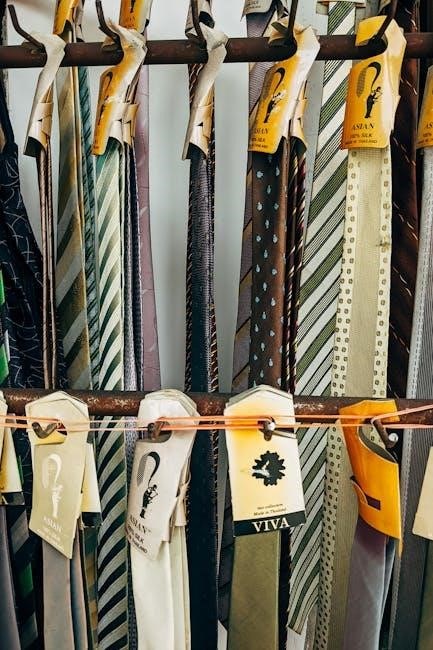
Maintaining the shape and quality of your ties relies heavily on proper storage methods. The debate between hanging and rolling ties continues‚ each offering distinct advantages. Hanging ties‚ utilizing a tie rack‚ prevents wrinkles but can stretch the fabric over time.
Alternatively‚ rolling ties – loosely‚ not tightly – conserves space and minimizes wrinkles‚ ideal for travel or limited closet space. Avoid overcrowding‚ as this can cause creases. Regularly rotating your tie collection ensures even wear and prevents any single tie from bearing excessive strain.
Hanging vs. Rolling Ties
The choice between hanging and rolling ties is a matter of preference and practicality. Hanging utilizes tie racks‚ offering visibility and preventing significant creasing‚ but prolonged hanging can stretch delicate fabrics.
Rolling‚ conversely‚ conserves space and minimizes wrinkles‚ making it ideal for travel. However‚ tightly rolled ties may develop stubborn creases; A balanced approach – rotating between methods – can maximize tie longevity. Consider the fabric; silk benefits from rolling‚ while heavier wools can withstand hanging.
Cleaning and Stain Removal
Maintaining tie appearance necessitates careful cleaning and prompt stain removal. Dry cleaning is generally recommended for most ties‚ especially silk‚ to prevent damage. For minor stains‚ gently blot with a damp cloth – avoid rubbing‚ which can spread the mark.
Specialized tie cleaning solutions are available‚ but test in an inconspicuous area first. Avoid home laundering‚ as it can distort the shape and fabric. Professional cleaning extends the life of your ties‚ preserving their color and texture.
Maintaining Tie Appearance
Preserving a tie’s pristine condition requires consistent care beyond just stain removal. Regularly inspect ties for loose threads and carefully trim them. Avoid excessive wear by rotating your tie collection‚ preventing premature fading or damage.
Gentle steaming can remove wrinkles‚ but avoid direct ironing‚ which can scorch the fabric. Proper storage (see section on storage) is crucial. A well-maintained tie reflects attention to detail and elevates your overall style.

Untying and Re-tying Techniques
Avoid aggressively yanking a tie loose‚ as this distorts the fabric and weakens the knot over time. Instead‚ gently reverse the tying process‚ carefully loosening each step.
When re-tying‚ don’t simply retie the same knot repeatedly in the same spot; vary the position slightly to prevent permanent creasing. Allowing the tie to rest overnight between wearings helps the silk regain its shape‚ prolonging its lifespan and maintaining its form.
Preserving Tie Shape
Proper untying is crucial for maintaining a tie’s shape. Avoid forceful removal‚ instead gently reversing each step of the knot. After wear‚ allow the tie to fully relax and de-wrinkle before storing.
Consider loosely rolling your ties instead of tightly folding them‚ as folding can create harsh creases. Regularly rotating your tie collection ensures even wear and prevents any single tie from losing its form prematurely‚ extending its overall lifespan.
Mastering tie knots elevates your style; consistent practice and exploring resources will refine your technique‚ ensuring a confident and sophisticated look every time.
The Importance of Practice
Consistent practice is paramount to truly mastering the art of tie tying. Initially‚ knots may feel awkward and require focused concentration‚ but repetition builds muscle memory and dexterity. Don’t be discouraged by early attempts; each tie‚ and untie‚ refines your technique.
Experiment with different knots and fabrics to understand how they impact the final look. Practice in front of a mirror to observe your progress and identify areas for improvement. Ultimately‚ the ability to effortlessly tie a tie stems from dedicated practice and a willingness to learn.
Resources for Further Learning
Numerous online platforms offer visual guides and tutorials to enhance your tie-tying skills. Websites like Ties.com provide comprehensive step-by-step instructions and videos for various knots‚ catering to all skill levels. YouTube channels dedicated to men’s style frequently demonstrate tying techniques.
Exploring these resources can unlock advanced knots and styling tips. Additionally‚ consider consulting style guides and books for a deeper understanding of tie etiquette and complementary fashion choices‚ solidifying your expertise.