The 1996 Ford Ranger’s manual transmission, often the M5OD-R2, provided durable and reliable performance for its time, becoming a common choice among truck owners.
Overview of the M5OD-R2 Transmission
The M5OD-R2 is a five-speed manual transmission widely utilized in the 1996 Ford Ranger. Known for its robust construction, it features a cast-iron case and is designed to handle the torque output of the Ranger’s engine options. This transmission employs a traditional gearset layout, offering reliable shifting and durability. It’s a relatively simple design, contributing to its longevity and ease of repair, making it a favored choice for both stock and modified Rangers.
Commonality and Reliability
The M5OD-R2 transmission’s widespread use across various Ford vehicles, including the Ranger, speaks to its inherent reliability. Owners frequently report high mileage with minimal major issues, provided regular maintenance is performed. While not immune to wear and tear, the transmission’s simple design and robust components contribute to its longevity. Its commonality also ensures readily available parts and a wealth of online resources for troubleshooting and repair.
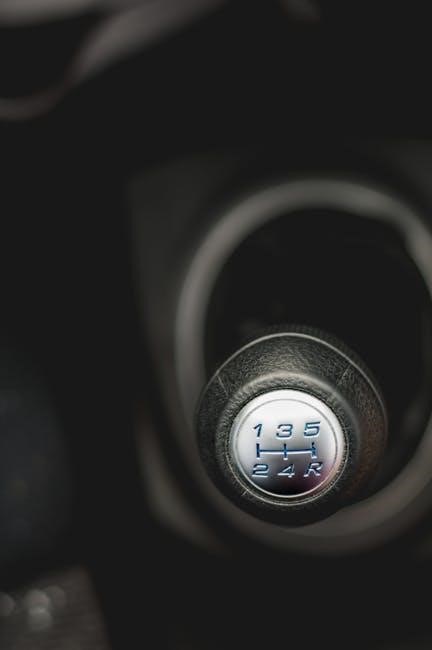
Identifying Your 1996 Ford Ranger Transmission
Determining your Ranger’s transmission involves checking the vehicle’s transmission code, typically located on the doorjamb sticker, or a thorough visual inspection.
Checking the Transmission Code
Locate the Vehicle Identification Number (VIN) plate, usually found on the driver’s side doorjamb. Deciphering the code requires referencing a Ford Ranger transmission code chart. This chart correlates specific alphanumeric characters within the VIN to the original transmission type installed at the factory.
Carefully note the characters in the designated transmission code position; this will definitively identify whether your 1996 Ford Ranger originally came equipped with a manual transmission.
Visual Inspection for Identification
A straightforward method involves physically inspecting the transmission case. Manual transmissions generally lack the provisions for a torque converter, unlike automatics. Look for the absence of a large, bell-shaped housing extending from the engine.
Observe the shift linkage; manual transmissions utilize a direct mechanical linkage, while automatics employ a cable. Confirm the presence of a clutch pedal inside the cab, a definitive indicator of a manual gearbox.
Common Problems with the 1996 Ford Ranger Manual Transmission
Typical issues include transmission slipping, difficulty shifting, grinding noises, and a burning smell indicating overheating—often linked to low or degraded fluid levels.
Transmission Slipping
Transmission slipping in a 1996 Ford Ranger often manifests as delayed engagement or the engine revving without a corresponding increase in speed. This commonly occurs between gears, particularly during acceleration. Low transmission fluid is a frequent culprit, but internal wear within the transmission, like worn synchronizers or clutch components, can also cause slipping. Contamination within the fluid, stemming from prior issues or excessive wear, exacerbates the problem, requiring a thorough fluid flush and inspection.
Difficulty Shifting Gears
Experiencing trouble shifting gears in your 1996 Ford Ranger’s manual transmission can indicate several issues. A worn clutch, failing master or slave cylinder, or low/contaminated transmission fluid are common causes. Difficulty may present as needing excessive force, gears grinding, or an inability to select certain gears. Internal transmission damage, such as worn synchronizers, also contributes to shifting problems, demanding a detailed diagnostic assessment.
Grinding Noises During Shifting
Distinct grinding noises when shifting gears in your 1996 Ford Ranger’s manual transmission often signal worn synchronizers. These components mesh gears for smooth transitions, and their deterioration causes audible grinding. Low or dirty transmission fluid exacerbates the issue. A failing clutch, bent shift forks, or internal transmission damage can also contribute to these noises, requiring a thorough inspection to pinpoint the root cause and prevent further damage.
Burning Smell & Overheating
A burning smell, particularly under load, coupled with potential transmission fault lights (like AT Temp or Check Engine) indicates overheating. This often stems from low or degraded transmission fluid. Contamination or excessive wear can trap debris within the cooling system, hindering heat dissipation. Overheating can quickly lead to significant internal damage, potentially causing the transmission to enter limp mode as a protective measure.
Fluid Maintenance and Checks
Regularly checking and changing the transmission fluid is crucial for the 1996 Ford Ranger’s manual transmission, ensuring optimal lubrication and preventing premature wear.
Recommended Fluid Type
For the 1996 Ford Ranger’s M5OD-R2 manual transmission, specifying the correct fluid is paramount for longevity. Ford’s Motorcraft Mercon V ATF is generally recommended, though some owners successfully use Mercon. Avoid using Dexron/Mercon or other incompatible fluids, as they can cause shifting issues and internal damage. Always verify compatibility before adding or replacing fluid, consulting a repair manual or trusted mechanic for confirmation.
Checking Transmission Fluid Level
To check the 1996 Ford Ranger manual transmission fluid, locate the fill plug on the transmission’s side. With the engine warm and running, remove the plug. Fluid should be level with the bottom of the fill hole. If low, carefully add the recommended fluid (Mercon V) until it reaches this point. Avoid overfilling, as this can cause leaks and damage. Always use a clean funnel and wear appropriate safety gear.
Transmission Fluid Change Procedure
Changing the 1996 Ford Ranger manual transmission fluid involves draining the old fluid via the drain plug, typically located on the transmission pan’s bottom. After draining, reinstall the plug and add approximately three quarts of Mercon V fluid through the fill plug. Check the level as described previously, ensuring it’s correct. Repeat if necessary, and properly dispose of the used fluid.
Troubleshooting Transmission Issues
Diagnosing problems requires checking fluid levels, inspecting for leaks, and noting symptoms like slipping, grinding, or difficulty shifting to pinpoint the root cause.
Diagnosing Slipping Gears
Slipping gears often indicate internal wear within the transmission, potentially involving worn synchronizers or clutch components. Begin by thoroughly inspecting the transmission fluid; a burnt smell or dark coloration suggests overheating and internal damage. Check fluid levels carefully, as low fluid can mimic slipping.
Evaluate if slipping occurs in specific gears or under load. A test drive focusing on these conditions will help isolate the issue. Consider that contamination within the fluid cooling system could also contribute to this problem.
Diagnosing Shifting Problems
Difficulty shifting gears in a 1996 Ford Ranger’s manual transmission can stem from several sources. Inspect the clutch linkage for proper adjustment and wear; a faulty clutch cable or master/slave cylinder can hinder smooth shifting. Low or contaminated transmission fluid can also cause issues.
Check for bent shift forks or damaged synchronizers. Observe if the problem occurs in all gears or specific ones, aiding diagnosis. A thorough inspection of the transmission mounts is also recommended.
Interpreting Error Codes (Check Engine Light)
While a 1996 Ford Ranger’s manual transmission doesn’t directly trigger a “Transmission Fault” code, related issues can illuminate the Check Engine Light. Codes like those related to the Vehicle Speed Sensor (VSS) can indirectly point to transmission-related problems, as the VSS impacts shift timing.
Codes indicating engine misfires or fuel trim issues might also appear if transmission drag affects engine performance. Proper code reading and interpretation are crucial for accurate diagnosis.
Repair Options and Costs
Repairing a 1996 Ford Ranger manual transmission ranges from DIY fixes for minor issues to professional overhauls or replacements, impacting overall costs significantly.
DIY Repair vs. Professional Service
Determining whether to tackle a 1996 Ford Ranger manual transmission repair yourself versus seeking professional assistance depends on your mechanical skill and the complexity of the problem. Simple tasks like fluid changes are DIY-friendly, while intricate repairs—such as synchronizer replacement or complete overhauls—demand specialized tools and expertise.
Professional services offer accurate diagnosis, quality parts, and warranty protection, but come at a higher cost. Carefully assess your abilities and the potential risks before deciding.
Typical Repair Costs for Common Issues
Repair costs for a 1996 Ford Ranger manual transmission vary significantly based on the issue and labor rates. Clutch replacements typically range from $300 to $700, including parts and labor. Addressing slipping gears or grinding noises could cost $500 to $1500, depending on the internal damage. A full transmission rebuild can range from $800 to $2000+, while a replacement transmission, installed, may exceed $1800. Always obtain multiple quotes.
Transmission Replacement Considerations
Replacing the 1996 Ford Ranger’s manual transmission is a substantial undertaking. Consider sourcing a used unit from a reputable supplier, ensuring compatibility with your truck’s drivetrain. New transmissions are expensive, potentially exceeding the vehicle’s value. Factor in labor costs, typically $500-$1000, alongside the transmission price. Inspect the clutch, flywheel, and related components during replacement to avoid future issues and ensure a smooth operation.
Parts and Resources
Finding replacement parts for the 1996 Ford Ranger manual transmission is possible through online retailers, local auto parts stores, and dedicated Ford communities.
Finding Replacement Parts
Sourcing parts for the 1996 Ford Ranger’s manual transmission involves several avenues. Online marketplaces like eBay and Amazon offer a wide selection, often at competitive prices, alongside specialized Ford parts retailers. Local auto parts stores can source common components, while salvage yards provide cost-effective options for used parts. Dedicated Ford Ranger forums and communities frequently host classifieds sections where members sell used or new-old-stock parts, offering valuable expertise and support during your search.
Online Forums and Communities
Numerous online forums and communities are dedicated to the Ford Ranger, providing invaluable resources for owners of 1996 models. These platforms offer a space to ask questions, share experiences, and access detailed technical information regarding the manual transmission. Members often post diagnostic tips, repair guides, and parts sourcing advice, fostering a collaborative environment for troubleshooting and maintaining these classic trucks. Active participation can significantly aid in resolving transmission issues.
Repair Manuals and Guides
Comprehensive repair manuals specifically for the 1996 Ford Ranger are essential for tackling manual transmission repairs. These guides provide detailed diagrams, step-by-step instructions, and torque specifications crucial for accurate work. Haynes and Chilton manuals are popular choices, offering coverage of various maintenance and repair procedures. Digital versions and online guides also exist, supplementing traditional printed materials for convenient access to information.
Preventative Maintenance
Regular fluid checks, timely changes, and employing proper shifting techniques are vital for extending the life of your 1996 Ford Ranger’s manual transmission.
Regular Fluid Checks and Changes
Consistent monitoring of your 1996 Ford Ranger’s manual transmission fluid is crucial. Inspect the fluid level regularly and assess its condition for any signs of contamination or a burnt smell. Following the manufacturer’s recommended service intervals – typically every 30,000 miles – for fluid changes helps prevent premature wear and ensures optimal performance. Using the correct fluid type is paramount; consult your owner’s manual for specifications. Proactive fluid maintenance significantly extends transmission lifespan.
Proper Shifting Techniques
Employing correct shifting practices extends the life of your 1996 Ford Ranger’s manual transmission. Avoid abrupt or forceful shifts, and fully depress the clutch pedal before each gear change. Match engine speed to road speed during downshifts to minimize wear on synchronizers. Refrain from “speed shifting” or “money shifting,” as these habits cause excessive stress. Smooth, deliberate shifts contribute to long-term reliability and prevent internal damage.
Avoiding Harsh Driving Conditions
To preserve your 1996 Ford Ranger’s manual transmission, minimize stressful driving habits. Frequent towing at maximum capacity, aggressive acceleration, and repeated hard braking strain the system. Avoid prolonged idling in gear, and refrain from “riding the clutch.” Consistent, moderate driving reduces wear and tear, extending the transmission’s lifespan and preventing premature failures. Prioritize smooth operation over demanding performance.
Specific Issues Related to Age and Mileage
As 1996 Ford Rangers age, synchronizer wear, clutch component failure, and seal leaks become prevalent, leading to fluid loss and diminished transmission performance.
Wear and Tear on Synchronizers
Over time, the synchronizers within the 1996 Ford Ranger’s manual transmission experience significant wear due to constant friction during gear changes. This wear manifests as difficulty engaging specific gears, often accompanied by grinding noises, particularly when shifting quickly. Worn synchronizers struggle to match the speeds of the gears, resulting in a less smooth and efficient shifting experience. Mileage and aggressive driving habits accelerate this deterioration, ultimately requiring transmission repair or rebuild to restore proper functionality.
Clutch Component Failure
The clutch, integral to the 1996 Ford Ranger’s manual transmission, is susceptible to several failure points with age and use. Pressure plates can weaken, leading to slippage, while clutch discs wear thin, reducing friction. Throw-out bearings may fail, causing noise during clutch pedal operation. These failures often present as difficulty shifting, a spongy pedal feel, or complete clutch engagement loss, necessitating replacement of affected components to restore proper transmission operation.
Seal Leaks and Fluid Loss
As the 1996 Ford Ranger’s manual transmission ages, seals and gaskets become brittle and prone to leaking transmission fluid. Common leak locations include the input and output shaft seals, as well as the rear main seal. Fluid loss reduces lubrication, accelerating wear on internal components and potentially causing shifting problems or complete failure. Regular inspection and timely seal replacement are crucial for maintaining transmission health and preventing costly damage;
Understanding Limp Mode
Limp mode restricts the 1996 Ford Ranger’s transmission to a lower gear, typically third, to prevent further damage after detecting a critical issue.
Causes of Limp Mode Activation
Several factors can trigger limp mode in a 1996 Ford Ranger’s manual transmission. Contamination within the transmission fluid cooling system, stemming from prior repairs or excessive wear, is a primary cause. Low transmission fluid levels, or severely degraded fluid quality, also initiate this protective measure. Additionally, internal transmission faults, detected by the vehicle’s computer, will force the system into limp mode to mitigate potential catastrophic failure and allow for safer, albeit limited, operation.
Resetting Limp Mode
Resetting limp mode on a 1996 Ford Ranger often requires addressing the underlying issue first. Simply disconnecting the battery may temporarily clear the code, but the problem will likely return. Diagnosing and repairing the root cause – such as low fluid or a faulty sensor – is crucial. After repairs, using an OBD-II scanner to clear the diagnostic trouble codes (DTCs) is generally necessary to fully restore normal transmission function and exit limp mode.
The Role of the Clutch
The clutch facilitates smooth gear changes by temporarily disconnecting the engine from the transmission, allowing for effortless shifting and vehicle control.
Clutch Adjustment Procedures
Proper clutch adjustment is crucial for optimal performance. Begin by loosening the locknut on the clutch cable. Adjust the cable until approximately 1/8 to 1/4 inch of free play exists at the clutch pedal; this ensures complete disengagement. Retighten the locknut securely. Incorrect adjustment can lead to slipping, difficulty shifting, or premature wear. Regularly check and readjust as needed, especially after cable replacement, to maintain smooth operation and prolong clutch life.
Signs of a Failing Clutch
Several indicators suggest a failing clutch. Slipping, where engine RPMs increase without corresponding speed, is a key symptom. Difficulty shifting, particularly into first or reverse, also points to issues. Unusual noises, like squealing or grinding during pedal operation, are concerning. A clutch pedal that feels spongy or sticks can indicate hydraulic problems. Ignoring these signs can lead to complete clutch failure and costly repairs.
Transmission Cooler System (If Applicable)
While less common on 1996 Rangers with manual transmissions, inspect cooler lines for leaks and damage, ensuring optimal fluid temperature regulation if equipped.
Checking Cooler Lines for Leaks
Carefully inspect the transmission cooler lines – if present – for any signs of fluid leakage. Look for wet spots, drips, or corrosion around the fittings and along the length of the lines themselves. Pay close attention to connections at the transmission and radiator. A flashlight can aid visibility in tight spaces. Feel the lines for dampness, even if no visible drips are present, as slow leaks can be difficult to spot. Address any leaks promptly to prevent fluid loss and potential transmission damage.
Cooler Maintenance
Regularly flushing the transmission cooler is crucial for longevity, especially with older Rangers. Contaminants and debris can accumulate, restricting flow and causing overheating. Consider a cooler flush every 30,000 miles, or more frequently with heavy use. Inspect cooler fins for blockage from dirt or debris, cleaning as needed to maintain efficient heat dissipation. Proper cooler function prevents fluid breakdown and ensures optimal transmission performance.
Long-Term Ownership Considerations
Proactive fluid changes and mindful driving habits are key to extending the life of your 1996 Ranger’s manual transmission, preventing future costly repairs.
Extending Transmission Life
To maximize the longevity of your 1996 Ford Ranger’s manual transmission, consistent preventative maintenance is crucial. Regularly scheduled fluid checks and changes, utilizing the correct fluid type, prevent internal wear. Employing smooth shifting techniques minimizes stress on synchronizers and gears.
Avoid aggressive acceleration and towing beyond the vehicle’s capacity. Addressing minor issues promptly—like small leaks—prevents escalation into major, expensive repairs. Careful operation and diligent upkeep will ensure years of reliable service from this robust transmission.
Potential Future Issues
Even with diligent maintenance, a 1996 Ford Ranger’s manual transmission may develop age-related problems. Wear and tear on synchronizers can lead to difficulty shifting, while clutch component failure is common with higher mileage. Expect potential seal leaks causing fluid loss, impacting performance.
Internal wear within the gearbox itself is inevitable over time. Proactive inspection and addressing these issues early can prevent catastrophic failure and extend the transmission’s usable life considerably.